Author: xnalgrtayache58

  • UN, Mauritania Concerned Over 'Seriousness of Situation' in Guergarate

    In a phone conversation, UN Secretary General Antonio Guterres and Mauritania’s Foreign Minister Ismail Ould Cheikh Ahmed “discussed the seriousness of the current situation and expressed their fear that it could further escalate and…

    Read more from the source : MAP News


    Tags : Mauritania, Morocco, Guerguerat,

  • Mauritania army reinforces positions along border with Morocco

    RABAT – Mauritania’s army has reinforced its positions along the border with Morocco, where some 200 Moroccan truck drivers have been prevented by the Algeria-backed Polisario Front separatists from crossing the border in the Guerguerat zone, a high-ranking local official said Wednesday…

    Read more from the source : Middle East Online


    Tags : Mauritania, army, borders,

  • Avec la fermeture du passage de Guerguerate, le Polisario apporte un soutien indéniable au Mali et à la Mauritanie

    Au Mali, les terroristes ont deux méthodes pour fincancer leurs opérations: l’argent des rançons payé par la France et la collusion avec les réseaux criminels transnationaux occupés, dans un premier temps dans la contrebande de Marlboro, ensuite, dans le trafic de cocaïne et du cannabis provenant d’Afrique subsaharienne et du Maroc. Au Mali, les armes utilisées pour terroriser la population ont été financées par le trafic de cannabis.

    Du passage d’El Guerguerat sortaient le cannabis cultivé au Maroc et la cocaïne qui débarque dans des bateaux marocains dans le port de Dakhla, au sud du Sahara Occidental. Une information corroborée par le rapport des experts de l’ONU sur la situation au Mali.

    Par conséquent, l’initiative de la société civile sahraouie contribuera à fermer un des principaux robinets qui alimentaient le terrorisme au Mali et dans toute la région sahélo-saharienne.

    Tags : Mali, Maroc, Sahara Occidental, El Guerguerate, cannabis, cocaïne, terrorisme, drogue, contrebande, finance,

  • تعليق رسمي من الحكومة الموريتانية على أزمة “الكركرات”

    قال الناطق الرسمي باسم الحكومة الموريتانية، سيدي ولد سالم، مساء اليوم الأربعاء، إن الديبلوماسية الموريتانية تعمل على حل مشكلة معبر «الكركارات» الحدودي «بأسرع وقت وبأقل التكاليف للمنطقة».

    ولد سالم الذي كان يتحدث في مؤتمر صحفي للتعليق على نتائج مجلس الوزراء الأسبوعي، قال إن أزمة الكركارات «تتعلق بمنطقة منزوعة السلاح، وتابعة لمنظة الأمم المتحدة وتتعلق بنزاع قديم»، وفق تعبيره.

    وأضاف ولد سالم « لسنا طرفا في النزاع، لكننا معنيين به كجيران لكل الأطراف»، على حد قوله.

    ويعتبر تصريح ولد سالم أول تصريح رسمي للجانب الموريتاني منذ أن أقدم ناشطون تابعون لجبهة البوليساريو على إغلاق المعبر، والتخييم في المنطقة العازلة.

    وأدى إغلاق معبر «الكركارات» إلى توقف حركة التبادل التجاري والمدني بين موريتانيا والمغرب، وهو ما أدى إلى أزمة في تموين أسواق موريتانيا بالمنتجات الفلاحية.

    El Horra

  • Richard Miniter letter on FPRI, Daily News, event in US Congress

    De : Richard Miniter

    À : Ahmed charai
    Envoyé le : Mar 25 janvier 2011, 0h 24min 13s
    Objet : FPRI, Daily News, Event in US Congress
    Ahmed,
    Again it was a great pleasure seeing you in DC this past week. I especially enjoyed the cigars that you brought me. I am happily smoking one now. 
    1. Regarding the event that you want to have in the US Congress. The Congressman who has been asked to reserve a room for us is Rep. Chris Smith, the new chairman of the Africa Subcommittee of the US House of Representatives’ Foreign Affairs Committee. In addition, he will send out copies of our event invitation to all congressmen and all staff members on his official stationery. Hudson Institute will organize the event, as Nina Rosenwald graciously promised you. But I need certain information from you in order to proceed: the names and organizations of all of the speakers you wish to invite (indicating which ones are US citizens or legal residents and which ones are subjects of the Kingdom of Morocco) and to provide which days in March or April would be best for this event. So please give me the answers to these questions by January 27th.
    2. Regarding the Foreign Policy Research Institute. What is the next step toward making me a senior fellow at that organization? Will you have Alan Luxenberg telephone me on 202/431-6521? 
    3. I will send you an article on Cote d’Ivoir no longer than February 25th, as we discussed. 
    4. I would be happy to sign my own name to the Daily News article about Morocco and Prince Hicham, if that helps you. Please let me know. 
    Best,
    Richard Miniter
    Cell: (202) 441-6521

  • AJC letter on Robert Elman visit to Morocco

    His Excellency Aziz Mekouar

    Ambassador Extraordinary and Plenipotentiary Embassy of the Kingdom of Morocco
    1601 21st Street, N.W. Washington, D.C. 20009
    Dear Aziz:
    I’m writing to follow up on our recent discussions about AJC’s plans – with your kind encouragement – to visit Morocco in December. Please allow me to lay out our current hopes and requests.
    First, and most basically: Our delegation of approximately 10 AJC Board members – led by AJC President Robert Elman – is scheduled to arrive in Casablanca on Tuesday, Dec. 14, at 3:50 p.m. (from Tunis). We intend to head immediately to Rabat for two nights, then on Thursday, Dec. 16, drive to Fes for a night, and then on Friday head back to Casablanca for the weekend. Some of our group will head home on Saturday or Sunday; others (including myself) plan to spend at least a day or two in Marrakech.
    I think you know precisely what and whom we should see. But I would like to formally request, on our delegation’s behalf, the possibility of an audience with His Majesty King Mohammed VI – to con- vey directly our appreciation for Morocco’s long friendship with the United States and with the Jewish people, and to gain His insights on the path forward toward Middle East peace. (Naturally, I would also like to thank His Majesty for the honor He so graciously bestowed on me last year.)
    I hope it will be possible to arrange a number of meetings/receptions in Rabat – fully utilizing the entire span that we are in town, from late-afternoon Tuesday, Dec. 14, to Thursday morning, Dec. 14.
    Naturally, I very much hope to meet with Taieb and with Yassine (whom I deeply regret missing in New York late last month), and with other government and political figures, and other individuals you deem appropriate. As always, we will hope to explore issues of regional peace and security, touching on the ongoing efforts to bolster Morocco’s economic and social infrastructure as it confronts extremism; the Kingdom’s trade and investment prospects; its social-development, renewable-energy, and educational achievements (with particular focus on the status of women); and its tradition of tolerance and diversity. Of course, we’ll want to devote due attention to the issue of the Western Sahara.
    In Fes, I hope we can meet with the local governor and/or with business leaders and other civil society figures (and, of course, sightsee). In Casablanca, I will again seek to collaborate with Ahmed Charai on the sort of roundtable discussion we’ve had in the past, with political, business and media fig- ures – and perhaps also arrange a separate media discussion or two, in addition to a visit to the Hassan II Mosque. And, certainly, we’ll spend time with Serge and others in the Jewish community.
    I look forward to discussing the above with you, at your convenience – and to another construc- tive and rewarding visit to your magnificent country. With warmest regards, I am,
    Sincerely
    American Jewish Committee
  • Persons invited for the Marrakech International Film Festival

    1- Nina Rosenwald is Co-Chair of the Board of American Securities Holding Corporation. 

    She is Chairman of the Board of the Middle East Media and Research Institute and Vice President of the Jewish Institute of National Security Affairs. She also serves on the Board of Directors of the American-Israel Public Affairs Committee, and Washington Institute for Near East Policy. She is a Board member of the Council on Foreign Relations, Board of Regents for the Center for Security Policy, the Committee for Accuracy in Middle East Reporting, New York Academy of Sciences, United Jewish Appeal/Federation, New York Psychoanalytic Research and Development, Jerusalem Center for Public Affairs, and the The Founders Association. 
    2- Ruth Franklin, a literary critic and a senior editor at The New Republic, is author of the new book, “A Thousand Darknesses: Truth and Lies in Holocaust Fiction” (Oxford University Press). Franklin started at The New Republic as assistant managing editor in July 1999 and became associate literary editor in February 2001. Her writing has also appeared in The New York Times Book Review, the New Yorker, Slate, The Washington Post Book World, The London Review of Books, and other publications 
    3-Joseph Braude: Journaliste et écrivain (The New Iraq) 
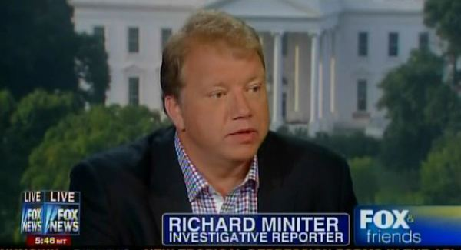
    4-Richard Miniter: Investigative journalist, Author of 2 New York Times bestsellers.
    Tags : Morocco, Marrakech International Film Festival,
  • Sonya Djivanides on SFCG Western Sahara think tank meeting

    De : Sonya Reines-Djivanides

    À : Ahmed Charai
    Cc : John Marks ; Emilio Cassinello
    Envoyé le : Lun 29 novembre 2010, 20h 58min 33s
    Objet : SFCG Western Sahara think tank meeting
    Dear Ahmed, 
    I hope you are well. I am sorry we did not get a chance to speak when you were in D.C. for the SFCG Awards and Board meeting. 
    As you know, Emilio and I are organizing a small meeting of experts from think tanks of the Group of Friends of Western Sahara. The purpose of the meeting is to address the Western Sahara conflict and specifically to review present positions of the Group of Friends of Western Sahara in relation to the conflict and to the parties, to brainstorm ways in which the Governments in the Group of Friends can review their respective policies and to review the lessons learned of past experiences with the goal of finding a viable final status solution. 
    The meeting will take place in D.C. December 5th-7th. We have invited a broad range of experts and are expecting to have productive meeting. 
    We just finished a very productive, energetic and creative two days on the question of the Western Sahara meeting of experts from think tanks of the Group of Friends of Western Sahara, Chris Ross was very involved in the process. I would like to debrief you on the meeting, who was present, what we discussed and the next steps. Please call me or let me know when you are free to speak. I would also very much like to meet in person so do let me know if you plan to travel to the US. Looking forward to hearing from you.
    Best regards, 
    Sonya
    Sonya Reines-Djivanides
    Director, Track II Mediation Unit
    Search for Common Ground
    1601 Connecticut Ave., NW | Suite 200 | Washington, DC | USA
    tel: +1 202 777 2240 | fax: +1 202 232 6718 
    sreines@sfcg.org | skype: sonyaSFCG | www.sfcg.org
    Understanding Differences; Acting on Commonalities.
  • Human Rights Perspectives in Morocco

    1. Title: Human Rights Perspectives in Morocco 

    Hosted by the Center for Strategic and International Studies (CSIS) 
    Participants: 
    Driss El Yazami: President, National Human Rights Council (CNDH), Morocco 
    Jon Alterman: Moderator: Director of the Middle East Program, CSIS 
    2. Overview
    This event focused on the activities of the CNDH as well as the general state of human rights in Morocco. Mr. El Yazami described the activities of the CNDH under the 2011 Constitution, its priorities, its challenges, and its evolving role in Morocco and the region. 
    3. Summary
    Mr. El Yazami posed the key question about human rights, in his perspective: Can an Arab country build a democracy and protect human rights peacefully, rapidly, without foreign intervention? He reiterated several times that what Morocco is trying to do in a relatively short period of time took decades if not generations in other countries. In addition, there are new players –youth and Islamists, who may not agree on the definition of universal human values. He feels strongly that a democracy is centered on the ability to discuss issues and respect differences. 
    Morocco is building a democracy and human rights regime step by step, by themselves, through extensive public discussion. Three important events in that process: the family code, the Royal Institute for Amazigh Culture (recognizing diversity and the country’s cultural pluralism), and the IER – Morocco’s version of transitional justice which is now informing similar projects in other countries. 
    Morocco has taken a different path to democracy in its new constitution, in which 60 of 180 sections include human rights. Key reforms that are upcoming include two dealing with the judiciary, violence against women, child labor, military tribunals, migration/asylum. He gave several examples of how much has to be done: 60 percent of women surveyed said that they have experienced domestic violence in the previous 12 months; 100,000 children are working illegally. Migration today is predominately south to south, which has its own unique challenges. 
    4. Q & A
    Q: (Alterman) The pace of change seems very slow. There are expectations raised, then nothing seems to happen. Is this good or bad? 
    A: It is good because what is happening is that people are staying on board, they are involved in a national public discussion among many different points of view. There is a need to train people on how to promote and embrace reform. According to the most recent detailed study, there are 45,000 NGOs in Morocco; 30 percent have a budget less than $500, 37 percent don’t have an office. They need training on the fundamentals of organizing and operating an NGO. Also, 52 NGOs do not have licenses from the Ministry of Interior. They should be allowed to register. That’s guaranteed in the Constitution. The HCP has prepared a report on Civil Society that was released last week. In five months, it will become legislation. We are still waiting for a law on decentralization. We need to create educational materials for use in the schools on Sahrawis. We have three offices in the Sahara and held 20 seminars over the past two years on building a human rights culture. All this takes time. 
    Q: (HRW) What about freedom of assembly, of association?
    A: NGOs should use the courts to get registered – the HPC report will generate new laws on this issue. 
    Q: (CSIS) What about human rights training for police and other officials? 
    A: Programs are moving ahead but they are difficult to do since you need three elements: the conditions such as salary, equipment, and resources have to be in place; You have to build a human rights culture through education. CNDH is hoping to be commissioned as the “national mechanism against torture” responsible for monitoring without restraint torture charges. 
    Q: (Independent Diplomat) What about people convicted previously under the military tribunals?
    A: The sentences are being appealed to the Court of Cessation, which can move the cases to civil courts if it rules that the procedures/processes were incorrect or insufficient.
    Q: (Congressional Research Service) How does one differentiate between what is the purview of the Palace and that of the Parliament?
    A: Under the new constitution, the Palace does not draft legislation. It can request legislation be drafted by the Parliament. The reform process is an interaction among the Palace, civil society, international actors, and local leadership. The challenge is how to learn the new roles/powers and enhance Parliament’s efforts given that they have no staff and a democracy needs an active Parliament.
    Q: (Moroccan community member) Do you think that human rights issues are sometimes manipulated by outside parties for political purposes? 
    A: Moroccans want human rights; from the 60s until now people have been fighting for human rights. It is both a national and an international agenda and it is a national and international responsibility. Morocco signed international conventions because it wanted to, not because it was forced to. Outside reporting helps Morocco, which will host the Global Human Rights Summit November 27-29. 
    Q: (Western Sahara representative) Why is Morocco afraid of human rights monitoring included in MINURSO? 
    A: Morocco doesn’t need external parties. The challenge for Muslims is how to implement human rights in each country. Morocco is doing that and is doing it well. 
    Q: (William Lawrence, GW/POMED) What is your opinion about Salafists and jihadists and how they should be treated? 
    A: They should be integrated into the national dialogue. We need to have the peaceful inclusion of diverse opinions. Also, we need to deal with the issue on integrating Muslims into other societies. 
    Q: (Moroccan Association for Relief and Development) What can the media do to promote human rights education? 
    A: Morocco must do much more to use the media in schools to promote a human rights culture. 
    5. Observation
    This event was attended by about 30 people from think tanks, the Embassy, Moroccan community, and other organizations. El Yazami was quite forthright; answering difficult questions; exhibiting a very deep commitment to CNDH’s work; and consistent in framing his analysis in terms of human rights, not political posturing. MACP should continue to integrate the work of CNDH into its materials and include them in delegation visits.
  • Saudi Arabia said to have played role in Israel-Morocco normalization agreement

    Saudi Arabia played a role in the Trump-brokered normalization agreement between Israel and Morocco, diplomatic sources told Channel 12 on Friday. The report did not detail the Saudi involvement in the US-brokered deal, announced Thursday, and Riyadh has not officially…

    Read more from the source : The Times of Israel


    Tags : Morocco, Israel, normalization, Saudi Arabia,