Author: xnalgrtayache58

  • Morocco / United States Strategic Partnership

    Subject 
    Planned actions 
    Political dialogue 
    High-level political dialogue: 
    Secretary of State and Minister of Foreign Affairs and Cooperation to meet once a year in Washington or in Rabat. 
    Share assessment and analysis on : 
    regional issues such as African Affairs, Middle East Peace Process, Maghreb, Sahel-Saharan region 
    multilateral issues such as Peace Keeping, Terrorism, Environment and Human Rights. 
    Coordinate actions at the UN and other international forums 
    Human rights dialogue: 
    Strengthening of the existing Human rights dialogue and extending it to thematic meetings on Press freedom, civil society, freedom of speech, etc. 
    Extension of the dialogue to cooperation, capacity building and exchange of best practices. 
    Regional cooperation 
    Morocco/US cooperation in the MENA region: 
    Morocco provides experts and advisors on developing civil society and political cooperation (regional training center for Governments officials, NGOs, community leaders, youth, etc.) 
    Triangular aid on the advancement of the role of women 
    Establishment of a Gender institute in Morocco 
    Morocco/US cooperation in the Maghreb : 
    Implementation of the US/North Africa Entrepreneurship initiative: 
    Next summit to be held in Morocco in October 2011 
    Morocco could host a Regional Enterprise Fund, similar to the SEED banks set up by the US in Eastern Europe (capacity building of small and medium sized enterprises, equity capital investments, extension of financial services, etc.). One of the first actions taken could be to invigorate the Morocco-US FTA to develop enterprise activities in target countries to accelerate economic growth and job development 
    Regional scientific cooperation. Morocco to host the US Conference on Science, Technology and Innovation (Cairo initiative), to be held in June 2011. 
    Morocco/US cooperation in Africa 
    Triangular cooperation towards African countries: 
    Cooperation between the development agencies of both countries (USAID and AMCI) 
    Cooperation in the fields of agriculture, water, health and environment. 
    Dialogue on crisis management / resolution in Africa. 
    Security cooperation 
    Establishment of a bilateral security committee addressing a wide range of issues, such as drug trafficking, terrorism and human trafficking (3 reports of the State Department) 
    Morocco to join the Global Counter Terrorism Forum to be officially launched in September 2011 
    Military cooperation 
    Economic and trade cooperation 
    Establishment of a US/Morocco Business Council: 
    Composed of private sector representatives from both countries 
    That issues recommendation for an enhanced cooperation in the field and a better implementation of the FTA 
    Strengthened cooperation on agriculture and renewable energies. 
    Scientific and Cultural cooperation 
    Establishment of “Excellence centers” in the field of public health, on the basis of the existing health centers and in cooperation with counterparts in the US 
    Joint initiatives aiming at the promotion of tolerance, religious dialogue and the fight against racism and anti-Semitism. 
    Strengthening of exchange programs for scholars, students, artists 
    Increasing the number of beneficiaries of Fullbright scholarships 
    Intensifying the learning of English language 
  • Italy considers patrols Off Tunisia to halt sea arrivals, use of quarantine ships raises human rights concerns

    Italy is considering patrols off Tunisian territorial waters to reduce sea arrivals. Human rights advocates, including Council of Europe Commissioner for Human Rights Dunja Mijatović, condemn the use of quarantine ships as the approach …

    Read more from the source : European Council on Refugees and Exiles


    Tags : Tunisia, refugees, exile, 

  • Social Security taxes/totalization agreement (Part II)

    Existing US treaties/agreements

    Per the SSA website, the following countries have signed totalization agreements with the SSA :
    Italy (November 1, 1978)
    Germany (December 1, 1979)
    Switzerland (November 1, 1980)
    Belgium (July 1, 1984)
    Norway (July 1, 1984)
    Canada (August 1, 1984)
    United Kingdom (January 1, 1985)
    Sweden (January 1, 1987)
    Spain (April 1, 1988)
    France (July 1, 1988)
    Portugal (August 1, 1989)
    Netherlands (November 1, 1990)
    Austria (November 1, 1991)
    Finland (November 1, 1992)
    Ireland (September 1, 1993)
    Luxembourg (November 1, 1993)
    Greece (September 1, 1994)
    South Korea (April 1, 2001)
    Chile (December 1, 2001)
    Australia (October 1, 2002)
    Japan (October 1, 2005)
    Denmark (October 1, 2008)
    Czech Republic (January 1, 2009)
    Poland (March 1, 2009)
    Mexico (Signed on June 29, 2004, but not yet in effect)
    Existing Moroccan treaties/agreements
    The Moroccan government has signed 18 bilateral conventions on Social Security payments per the CNSS website. Others are in the process of negotiation:
    Conventions signed and in effect (12):
    1. France (July 9, 1965)
    2. Belgium (June 24, 1968)
    3. The Netherlands (February14, 1972)
    4. Spain (November 8, 1979)
    5. Sweden (January 4, 1980)
    6. Germany (March 25, 1981)
    7. Denmark (April 24, 1982)
    8. Romania (July 27, 1983)
    9. Libya (August 4, 1983)
    10. Tunisia (February 5, 1987)
    11. Canada (July 1, 1998)
    12. Portugal (November 14, 1998)
    Conventions signed for ratification (06):
    1. Algeria (February 23, 1991)
    2. U.M.A (March 10, 1991 – multilateral convention)
    3. Italy (February18, 1994)
    4. Québec (May 25, 2000
    5. Egypt (May 12, 2006)
    6. Luxembourg (October 2, 2006)
    Conventions in negotiation (03):
    1. Norway
    2. Greece
    3. Turkey
    Morocco’s conventions cover the following basic principles:
    Equality of treatment between Moroccan nationals and the host countries’ nationals in terms of rights and duties relating to social security. 
    Determining the needed legislation to avoid undue accumulation of social security contributions or other contributions and employee-born benefits.
    Maintaining the authority of the initially applied legislation in exceptional cases, such as maintaining affiliation if the person is working on another country’s territory.
    Retaining rights in the acquisition process for maintaining contribution, employment, and residence periods complying with one party’s legislation, and cumulating it with corresponding periods achieved with the other party, in order to 1) acquire, maintain, or regain rights and, should it occur, calculate benefits; and 2) enroll in voluntary or optional insurance.
    The transfer of acquired benefits to beneficiaries in line with one party’s legislation, regardless of their p
    lace of residence. 
    Need for an US-Morocco agreement
    No exceptions to the above can be made unless an agreement is in place. For example, the “detached worker” rule (designed to minimize disruptions in the coverage careers of workers whose employers send them abroad on temporary assignment) or “seconded” expats (those workers on loan for a determined period not exceeding an authorized duration) apply only within the framework of an existing bilateral agreements on social security entered into between Morocco and the United States.
    CNSS was contacted regarding this issue in December 2010, and they confirmed that no convention/agreement is in place, none is in the works, and the above rules apply to US expats with no exceptions. They expressed their frustration at this void and their strong desire to see this matter resolved between Morocco and the United States. 
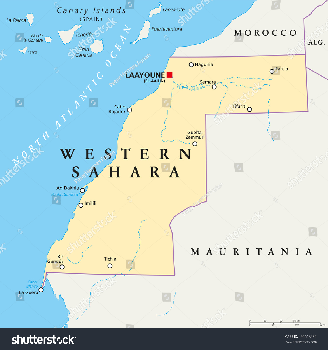
  • El Guerguerat: to defend its interests flouted by the Polisario, Mauritania…

    The spokesperson of the Mauritanian government, Sidi Ould Salem, affirmed, at the end of the Council of Ministers held yesterday, Wednesday November 11 in Nouakchott under the presidency of Mohamed Ould Cheikh El Ghazouani, head of state…

    Read more from the source : Al Khaleej Today


    Tags : Mauritania, Western Sahara, El Guerguerat,

  • Social Security taxes/totalization agreement (Part I)

    Memorandum

    TO: H.E. Ambassador Rachad Bouhlal
    From: Ed Gabriel
    RE: Eliminating Duplicate Social Security Payments
    Mr. Ambassador
    This document provides the background on the need to promote the adoption of a “totalization” agreement between Morocco and the US in order to eliminate duplicate social security payments for US employees residing in Morocco for more than six months. 
    I have also attached a copy of the Social Security Administrations (SSA) Totalization Agreement with Spain which clarifies what type of clauses are included in such agreements.
    I appreciate your attention to this concern and look forward to discussing it in detail with you.
    Regards,
    Ed
    Ambassador Edward M. Gabriel, Ret.
    President and CEO
    The Gabriel Company, LLC
    1220 L Street NW, Suite 411
    Washington DC, 20005
    Phone: +1 202.887.1113
    Fax: +1 202.887.1115
    Email: ed.gabriel@thegabrielco.com
    Website: http://thegabrielco.com
    PROPOSAL FOR THE CREATION OF THE:
    Morocco US Totalization Alliance (MUSTA)
    To eliminate duplicate social security payments
    Overview
    With increased prospects for a greater number of US citizens working in the Kingdom of Morocco, US employers with operations in Morocco, whether corporate or NGO, have expressed increased concern with regard to ensuring that the tax consequences for the employer and employees are dealt with equitably. Morocco has a tax agreement with the United States (Convention for the Avoidance of Double Taxation and the Prevention of Fiscal Evasion with Respect to Taxes on Income – signed in Rabat 1 August 1977, and Related Exchanges of Notes), but it does not apply to the estate, gift, and generation-skipping transfer taxes, the Windfall Profits Tax, Federal unemployment taxes, social security taxes, or excise taxes on premiums paid to foreign insurers. Therefore, US expatriates must conform to Moroccan social security laws and US employers are required to register their employees with the Caisse National de Securite Sociale (CNSS) and pay social security taxes on the basis of an employee’s gross salary and other benefits granted to the employees. 
    To alleviate this double taxation in other cases, the US Social Security Administration (SSA) has signed treaties, often referred to as Totalization Agreements, with government social insurance programs in various foreign countries. These treaties serve two main functions: 1) they eliminate dual Social Security taxation, so that workers from one country working in another country will not have to pay Social Security taxes to both countries on the same earnings; and 2) they help fill gaps in benefit protection for workers who have divided their careers between the United States and another country by providing continuity in their social security payments.
    Since a bi-lateral social security agreement/convention does not currently exist between the US and Morocco, it is necessary to initiate an effort to promote the mutual adoption of such an agreement at the earliest possible opportunity. 
  • Scene Setter – Your Senior Meeting at the State Department (Part III)

    Bilateral Commission 

    Unless some in-depth preparations have taken place already of which we are unaware, we are highly skeptical that U/S Burns and/or Secretary Clinton will be prepared on this visit to do more than agree a statement that formally establishes a Commission and states its purpose in general terms. It would be a plus, but might be very difficult without prior in-depth preparations, to have included in such a statement any description of its modalities (working groups are our recommendation) and periodicity (quarterly at the working level and annually at senior level — our counsel). We think it should be possible to define the categories in broad terms in a statement at this point such as “US/Moroccan bilateral relations, and security, social, economic and political development issues in the North and West Africa and the Middle East regions.” This is broad enough to allow discussion of what you want to include in specific categories. 
    Our advice is to concentrate first and foremost on agreeing to the language of the statement establishing the Commission and then concentrate on agreeing to what the content should be in terms of general issues to be covered, basic modalities of how it would function, and the meeting schedules. This would be a tremendous achievement in itself if all of this can be accomplished on this visit. In our view, trying to accomplish too much at such a senior level in one meeting without in-depth prior preparation risks putting the enterprise in jeopardy. It bears recalling that there is now little interest in this proposal below the Secretary and U/S Burns. Thepriority is to get something concrete established that will present the bureaucracy with something of a fait accompli so that they will then have to produce results for submission to more senior levels. You could also announce the appointment of a dual secretariat to oversee the commission on a daily working basis, If you can reach such agreement by the time of the meeting. In other words, each country would appoint a principal person to oversee the work of the committees of the commission. These two individuals would become the overall coordinators for the effort and could be announced at the time of the Burns meeting. 
    In any case, we suggest that you propose a senior level group to meet in the immediate future (we would suggest in Rabat) to conclude details on a formal statement of purpose and scope for the Commission once the language and statement to establish the Commission has been agreed and announced in Washington at a senior level on this visit 
    For such a statement establishing the commission, and if discussions proceed to that depth during your visit, we suggest that the “charter” for the commission begin with a preamble that recalls the strong and historic character of US/Moroccan relations and emphasize our common commitment to a set of shared political and social values based on democratic process, respect for human rights, minority and gender equality, justice before the law, and respect for international agreements in the resolution of regional disputes. 
    In terms of establishing categories for working groups, we think that the more simply it is presented, the better the chance of its being accepted. We would suggest that you propose only two broad categories at the outset. One working group would work on bilateral issues between the US and Morocco. This group could cover the full range of issues from human rights to economic assistance. It clearly would be managed within State at the Office Director level through periodic interagency meetings to work on issues that are commonly agreed as requiring priority attention. 
    The second group should focus on regional security, political, and social development issues. This is where US/Moroccan cooperation on political development in the MENA and West Africa region would be coordinated. It is also where Sahara would be discussed. At State, this second group would also likely fall to the Office Director to manage. The inclination will be to keep the workload down and not get overly ambitious lest the process fall victim to overwork. This is why we suggest keeping it to two groups and tightly defining priorities in each group. But we believe the Sahara should be a visible and important part of any committee structure, whether as a stand-alone committee or as part of a larger “regional” committee. 
    Separate committees under each broad category can be defined at a later time, or evolve from the first meeting and prior to a working group meeting in Rabat. In any case, the WS will need its own concentrated effort at the Fassi Fihri – Burns/Feltman level, and should be agreed upon as an issue that will be regularly discussed with specific action agenda items attached to the effort. We see this as the only way to keep the Sahara dialogue on a progressive track and potentially become an ingrained issue to be dealt with by this Administration and potentially future Administrations.
    Tags : Sahara Occidental, Front Polisario, Maroc, Morocco, 
  • Scene Setter – Your Senior Meeting at the State Department (Part II)

    Goals for Your Visit: 

    Obtain a senior level public announcement of a bilateral US/Moroccan commission to cooperate on issues of common bilateral as well as regional concern on both strategic security and political developments and in the MENA and West African regions. 
    Obtain a fresh and unequivocal senior level statement on Sahara that repeats the “serious, credible and realistic” phrase and also incorporates an element stressing the urgency of solving this problem and urges the need for compromise based on “realistic” terms. 
    Make sure that the Sahara issue has its own committee or special status within the commission. We believe that for the remainder of the Obama Administration, no further progress will be made on the Sahara issues unless it is part of a regularized commission discussion. Otherwise it will become a struggle just to keep the issue where it is. 
    We have not been privy to all of the various diplomatic exchanges that have taken place since your last visit to Washington, but our read on the situation at State today, from what we discern from watching their statements and reports in the news, is that little has changed within the bureaucracy since you were last here. Clear statements on the Sahara issue are void in their discourse. State’s behavior in the General Ham affair leads us to conclude that some there still believe they can get away with “improving” relations with Algeria at Morocco’s expense, although State may not characterize it that way. And State’s less than fully enthusiastic and unequivocal endorsement of the run up and the results of the reform vote all leave us with the view that the NEA has not yet been persuaded that they need to take Morocco’s interests more seriously. Like Ambassador Mekouar, we were astonished and taken back at how little State seemed to understand about what was happening on the ground in Morocco in the run up to the vote. Janet Sanderson’s charges of “rubber bullets and tear gas” and “we’re watching you” approach on the issue was not just out of place, it represented a serious, indeed almost willful, misreading of events on the ground. 
    In our continuing view, this kind of “dug in” resistance within the State bureaucracy can only be overcome by more frequent high level contact that lifts and regularizes the level of the dialogue to more senior levels and thus bears better prospect of reining in those within NEA (and elsewhere in State) who give every indication that they are still working a different agenda than the Secretary and her Deputy would prefer for Morocco. 
    Sahara Statement 
    The timing for such a statement is perfect following another process filled attempt by Chris Ross. The arguments in favor of such a statement remain the same. We think it more than appropriate to draw attention to the fact that since your visit and the Secretary’s statement, State has consistently failed to repeat the agreed language. Instead, returning to the same formula you noted was unsatisfactory for Morocco on your last visit. This should also provide the opportunity to leverage that failure into a further demand that the statement include the two additional elements we noted above – urgency and the need for compromise based on realistic terms.
    Tags : Sahara Occidental, Western Sahara, Frente Polisario, Maroc, Morocco, 
  • Scene Setter – Your Senior Meeting at the State Department (Part I)

    Recent Background: 

    Reforms — Your trip to Washington comes on the heels of the successful constitutional reform vote that has received a great deal of attention in the English language press, both online and in hard copy. Most of the coverage has been positive and complimentary of Morocco. That has been especially true when the articles have carried bylines of US journalists. They often contrast Morocco’s achievement with the continuing turmoil and repression elsewhere in the region. Positive commentary has largely pointed to the important ceding of significant executive authorities to the elected head of government, the independence of the judiciary, greater rights for the Amazigh, the strengthening of human rights and gender protections, and the devolution of power to local elected leaders. By and large, the editorial line has been that these are very important steps forward in the democratic evolution of Morocco and an example to the region. 
    However, the coverage has not been uniformly congratulatory. Local Moroccan and other Middle East based Arab stringers for major US and other English language media outlets (especially their online editions and especially the British press) continue to provide a critical platform for clearly minor political actors in Morocco and have put the emphasis on a skeptical editorial point of view, even embedded in hard news coverage. Little or no attempt is made to define these critical voices as representing a small minority. Rather, these articles continue to allow radical Islamist views and those of the far left to fly under the false flag of the February 20 “democratic youth movement.” A few more analytical pieces have pointed out this fallacy, but the viewpoint continues albeit less than the positive press overall. 
    We believe we are winning the opinion war in the media, but it requires constant and unrelenting attention. We believe that more outreach to the US media is in order. This is where Congress and other opinion leaders get their information and we need to do whatever we can to ensure that a positive story line dominates the coverage. 
    Sahara — Your trip also comes on the heels of another process rich, but content poor, meeting of Chris Ross’s periodic UN gathering on the Sahara. We have been disappointed that statements on this issue subsequent to your last visit to Washington seem once again to have fallen back into the hands of State’s bureaucracy. It is interesting to note that in a briefing with academics traveling to Morocco – following a presentation by the Moroccan desk officer – we inquired as to the position offered by her on the WS. The academics were told that the US policy, according to the Desk Officer, favors a sovereignty/autonomy solution. This is the first and only sign that we have seen a public acknowledgement of the US policy on the Sahara, other than from Hillary Clinton or Bill Burns. This does not however alter the concern we have regarding the view that the NEA is resistant to making clear statements on a Sahara policy. 
    We were especially surprised by a recent article in Al Jazeera’s English language online edition by Jeremy Keenan from the University of London which took a very critical view of the US “turning a blind eye” to Algerian support for Gaddafi’s regime, calling AFRICOM commander Carter Ham the “one-eyed general.” The article offered very specific and damning evidence of this support and appeared to have likely been well informed by either French or British intelligence and military sources (or both). If this article is accurate, and the verifiable information it cites certainly seems credible, its most damning charge was that the US has conspired with the British and French to cut a deal with Algeria to let Bouteflika off the hook in public if he would agree to cease support for Gaddafi. This has clearly and seriously undercut our efforts to tar the Polisario with sending fighters to Libya. Politics are what they are, and international politics more so, but this shines a new light on why the US was so put out and harshly and personally critical of our effort in MACP to bash Algeria and the Polisario for their support to Gaddafi. This argument was carrying great weight in undercutting the Polisario in Congress and among some media and opinion leaders. We were drawing unwanted and too visible public attention to this problem while they were working behind the scenes to back the Algerians off its support for Gaddafi’s regime. In our view, the State Department should not have the option of pursuing this policy with Algeria without attention to the impact on Moroccan interests in the region. 
    Furthermore, we are in receipt of intelligence information that points to the proposition that activity by and support for the Polisario in Europe is on the increase, and they have made inroads in the UK, the Netherlands, and Scandinavian countries. With the upcoming elections in Spain, the report we received also underscores the possibility of electing a Conservative government that will be hostile to Moroccan policy. These developments will only complicate US positions in the Security Council and in Washington. 
  • Sahara Occidental : Violents affrontements entre des unités militaires marocaines et sahraouies à El Guerguerate

    Selon un communiqué du ministère sahraoui de l’information, l’armée marocaine a enregistré une nouvelle flagrante violation du cessez-le-feu dans la zone d’El Guerguerate.

    Dans les premières heures de l’aube de ce vendredi, l’armée marocaine est sortie en ouvrant trois nouvelles brèches dans le mur de sable. 
    La réponse de l’armée sahraouie ne s’est pas fait attendre. Elle a riposté immediatement aux attaques de l’ennemi en vue de protéger les civils sahraouis qui y mènent un sit-in depuis le 21 octobre dans le but de dénoncer l’illégalité de la brèche d’El Guerguerate.
    Dans un communiqué publié ce matin, le Front POLISARIO affirme qu’un groupe d’agitateurs marocains sélectionnés parmi la chusma de la rue marocaine et des soldats déguisés en civils se sont pris aux civils sahraouis qui manifestaient pacifiquement dans la région pendant qu’un contingent militaire essayaiet d’encercler la zone.
    Le communiqué indique que, pendant que les civils affrontaient courageusement la chusma marroquí, les combattants de l’Armée de Libération Sahraouie fustigeait l’armée marocaine.
    “Bref, souligne le communiqué, les batailles ont commencé et la guerre imposée à notre peuple a éclaté, et avec elle nous sommes entrés dans une nouvelle étape décisive dans la lutte de notre fier peuple, défendant son droit légitime à la liberté, à la dignité et à la souveraineté”.
    “En conséquence, le Front populaire pour la libération de Sakia al-Hamra et Rio de Oro appelle tous les membres du peuple sahraoui à se présenter comme un seul homme avec la fermeté et le courage habituels nécessaires en réponse à une agression brutale et à achever la libération de la patrie occupée avec tous les sacrifices et la détermination nécessaires sur le chemin des martyrs héroïques”, conclue-t-il.
    Tags : Sahara Occidental, Front Polisario, Maroc, El Guergarate,
  • Western Saharan Polisario says Morocco has broken ceasefire, ‘ignited war’

    The Polisario group seeking independence for Western Sahara on Friday accused Morocco of breaking their nearly three-decade ceasefire and igniting a new war after Moroccan forces moved to reopen a road closed by protesters. Morocco’s army said earlier it had erected a …

    Read more from the source : Al-Arabiya


    Tags : Morocco, Western Sahara, Guerguerat,