Category: Western Sahara

  • Washington team progress report (Part V)

    Results:

    In March, the Washington Team’s efforts to highlight Morocco’s role as a leader for democratic reforms and peace in the region generated more than 320 positive media placements and 20 million favorable media impressions. 
    The Polisario and Terrorism in the Sahara/Sahel
    During March, the Washington Team continued its efforts to call US attention to the growing threat of AQIM and other terrorist groups in the Sahara/Sahel in order to shape the debate and reinforce perceptions of the Polisario’s negative role in the region. These efforts included journalist outreach, arranging briefings by Washington Team members and third-party spokespeople, and creating fact sheets and other supporting documents for distribution to target audiences. 
    Activities:
    Following the March 2 publication by The Hill of an op-ed by Ambassador Edward Gabriel, “Stop subsidizing recruiting grounds for terrorists and traffickers,” several other media outlets republished or cited the piece, including the World247.net News network and the U.K. Foreign Office/U.K. Government Online. Also, the Italian-based online newspaper, Lettera 43, published an article about terrorism in the Sahel that cited ICTS reports and maps. 
    To maintain US media attention on the continued detention of the European aid workers kidnapped by members of an AQIM-related group with suspected help from members of the Polisario Front, the Washington Team authored a blog posting on the MOTM website on March 20, “Day 150 – still hostage: Rosella Urru, two others seized by AQIM sect in Polisario camp.” This posting will be a part of a regular series of updates on the kidnapping as the situation develops. 
    On March 27, the Global Post published an op-ed by Jordan Paul, “Why are we perpetuating a source of instability in North Africa?” The op-ed made the case for retargeting non-humanitarian aid destined for the Polisario to stop perpetuating the refugee camps’ deteriorating security and humanitarian conditions and urged US leadership to resolve the Western Sahara conflict. 
    In late March, the Washington Team compiled a paper, “Spotlight: The case for redirecting US support for the Polisario-run camps in Algeria, which are becoming a recruiting ground for AQIM, arms and drug traffickers.” The paper provides background information and a chronology of documented incidents and reports linking members of the Polisario Front with AQIM, trafficking, and other illicit activities in the region. It will be widely distributed in April to key contacts in Congress, the media, and think tanks.
    Tags : Western Sahara, USA,
  • Washington team progress report (Part IV)

    Morocco as a Leader

    During the month of March, the Washington Team continued its efforts to promote Morocco as a model of progress and reform by regularly briefing and engaging influential policy makers, think-tank leaders, and target journalists.
    Activities:
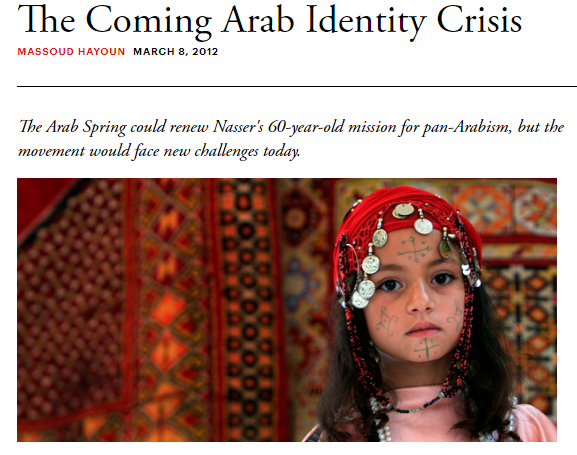
    On March 8, The Atlantic magazine, a well-respected publication on culture, current events, and politics for more than 150 years, published an article, “The coming Arab identity crisis,” by Massoud Hayoun which focuses on the questions of Arab identity that have resurfaced during the Arab Spring. The Washington Team arranged an interview for its author with Ambassador Edward Gabriel, who is quoted among other influential leaders in the Arab Diaspora. For further distribution, a blog column highlighting the article was posted on “Who’s who in the Arab world? Examining Arab identity,” on the Foreign Policy Association’s Foreign Policy Blog.
    On March 13, Elliott Abrams, Senior Fellow for Middle Eastern Studies at the Council on Foreign Relations, hosted a roundtable at the Council’s offices in Washington with Ambassador Bouhlal entitled, “Morocco and the Arab Spring.” At the event, which was organized through the Washington Team’s outreach to Abrams and CFR, Ambassador Bouhlal detailed Morocco’s reform process and answered questions about the implementation of the new Constitution. 
    In early March, the POMED Wire, a blog of the Project on Middle East Democracy, posted a report citing dubious torture allegations against Morocco made on the Sahara Press Service (SPS) website. The Washington Team contacted POMED’s executive director, alerted him to the questionable nature of many SPS publications, which prompted him to inform his bloggers to keep the unprofessional nature of SPS in mind before republishing or sourcing its work. Following the conversation, POMED agreed to post a piece on the POMED Wire authored by Ambassador Edward Gabriel, “Gabriel: Change, reform, and progress in Morocco,” which outlined the year of reform in Morocco and how its “Arab Spring” experience was successful and exceptional.
    On March 23, the Foreign Policy Association’s Foreign Policy Blog published a column by Moroccan-American international attorney, Leila Hanafi, “Constitutional reforms in Morocco: Outlook for youth rights.” The article examined the success of the current reform process in Morocco and what measures will be necessary to insure that success is sustained and far-reaching. Knowing that Ms. Hanafi’s articles can be somewhat dubious in content, when she asked the Washington Team for feedback we reviewed the draft at her request in order to ameliorate any adverse consequences.
    Tags : Western Sahara, USA,
  • Washington team progress report (Part III)

    Campaigns

    The Washington Team’s MOTM website and social media program (@MorocOnTheMove) continues to broaden the reach for our messaging, in terms of quantity and targeted audiences. After five months online, nearly 250 postings of news articles and original content by the Washington Team have appeared and the website has received more than 24,000 hits. In that same period, @MorocOnTheMove has sent nearly 900 tweets, has close to 250 followers, and has been retweeted regularly by influential personalities on Twitter. Although we have to improve these numbers even more in the months ahead, this is a strong beginning to our social media efforts.
    As part of increasing efforts to engage more regularly with our target audiences, particularly through email and social media, the Washington Team distributed an e-letter, “Reform, stability, and the Western Sahara” to our contacts database of approximately 3,000 policymakers, media, academics, think-tank and NGO leaders, Administration officials, and Congressional staffs. This e-letter highlighted and redistributed materials mentioned in the Communications report including the ICTS report, the Atlantic magazine article, the paper published by the Carnegie Endowment, the Roll Call column, Congressional Record remarks, The Hill op-ed, , the Washington Post “Right Turn” column, the POMED column, and positive press about the launch of RAMED, Morocco’s large-scale healthcare program aimed at providing care to disadvantaged citizens, as well as specific items Rabat wants us to highlight though its mediatization requests. 
    Also, in March, the Washington Team began distribution of a weekly “Morocco highlight e-mail” to our contacts database, in which one or two events, publications, and/or positive press articles are featured. The purpose of this weekly highlight is to draw attention to an important messaging opportunity to the contacts about Morocco. The first “Morocco highlight e-mail” redistributed the March 27 Global Post op-ed. 
    Tags : Western Sahara, USA,
  • Washington team progress report (PartII)

    The Communications report below indicates that positive coverage of Morocco far outweighs negative coverage associated with Amina Filali and Aminatou Haidar. Security concerns related to the region, Morocco’s leadership at the UNSC, continued concerns with the direction of the Arab uprisings, and op-eds that show how Morocco is making progress in its reforms and economic development, all contribute to the positive image of Morocco in the media.

    This report is not exhaustive nor is it fully detailed as we focus on the items that have the most impact on our strategy. Since it is difficult to distinguish some of the work of the Moroccan American Center from that of the Embassy, this report includes select activities of the Embassy, MAC, and its consultants as the “Washington Team”.
    OR:
    This report is prepared by the Moroccan American Center, including MACP, MACC and MATIC. It is not exhaustive nor is it fully detailed as we focus on the items that have the most impact on our strategy. While we attempt to only highlight work that MAC has been involved in, in some cases we touch upon the work of others, such as the Embassy or other pro-Moroccan entities. In such related cases, we try to only report on activities where MAC has had a role as well, or where the activity is worthy of highlighting to the Rabat team since it relates to one of the Team’s main objectives. In all cases we try as much as possible to keep this reporting to the principal work of MAC. 
    Tags : Western Sahara, USA,
  • Washington team progress report (Part I)

    Introduction

    In the highly politicized atmosphere in Washington during this US presidential election year, US foreign policy receives little attention except when crises occur. In times past, US presidents could count on “flying the flag,” appealing to American patriotism as a means of building support for policies. Today, every word or action is placed under a magnifying glass to determine or infer hidden meanings that reveal the weakness of the proposed policies. Thus, very little moves in Washington regarding policy that is not related to problems and challenges that cannot be delayed. 
    This challenging milieu makes the efforts of the Washington Team to move the Obama Administration to approve US funding for projects in the Western Sahara even more daunting. Yet the results to date are largely positive. Despite the negative media coverage of the Amina Filali case and Aminatou Haidar’s regular visits to New York and Washington to speak against Morocco’s human rights record, Morocco continues to find a positive reception in Congress. The Washington Team’s drive to have more than 300 meetings with Congressional offices before the summer recess is making great progress. The key message, that US foreign assistance to the camps should be given on condition that it directly improves the lives of the refugees, is being well received. The Team is also working with members and staff to define what these “conditions” should be and concrete projects that the US should fund in the South.
    There is a dilemma in the Washington Team’s activities in that Morocco is not in crisis, therefore, some policy makers would prefer to leave the Kingdom’s issues off the agenda while the Administration deals with Syria, Iran, Iraq, and crises beyond the MENA region. Ending the Western Sahara conflict, while a helpful outcome to US interests in the region, is not given a high priority by some in the government. It was therefore helpful that the remarks following the meeting between the Foreign Minister and Secretary Clinton reaffirmed the centrality of the Western Sahara conflict and the commitment to the bilateral strategic dialogue. This visit, and Secretary Clinton’s visit to Morocco, and the generally high praise that Morocco is receiving for its role on the UN Security Council, continue to make the case that Morocco is a leader in the region, and among America’s friends worldwide.
    Tags :United States, USA, Western Sahara,
  • Morocco : The challenges of democratic reform (Part II)


    The Minister provided specific examples throughout his presentation of actions being undertaken by the new government to deal with these challenges and the changing political environment in Morocco.

    4. Q & A

    Q: (Jon Alterman) Given Adl al Ihsan’s opposition to the monarchy, what is the future for Islamic politics in Morocco—greater diversity or cooperation?

    A: Both are happening at the same time. The key challenge for all Islamist parties is to link Islam and democracy. Islamists have to decide whether or not to be part of the political party system.  

    Q: (Karim Mezran, the Atlantic Council) How will decentralization lead to solving the Western Sahara crisis? 

    A: The constitution provides for regionalization is all matters: budget, administration, social and cultural policies. Regionalization provides a means for the transition from the current situation to autonomy. 

    Q: Three questions on women’s rights 

    A: The basic protection and rights of women are already enshrined in the moudawa. The constitution calls for full equality and that is part of our national agenda, adopted by parliament. A national watchdog has been proposed to protect women’s rights by monitoring what is going on and if targets are being achieved. Gave details of what steps are being taken.

    Q: (Haim Malka, CSIS) How to manage expectations?  

    A: People want concrete results. Transparency is the key. In conflict areas, government is encouraging open dialog with all stakeholders. Expect that passing of budget by mid-April will enable government to accelerate efforts to reduce poverty, expand healthcare coverage, and promote other economic and social development projects. 

    5. Observation

    40 representatives from various NGOs, including Eric Goldstein from HRW, and think tanks participated in the program. The Minister spoke eloquently, thoughtfully, and credibly about the challenges facing the government as it works to implement the new constitution. He gave multiple examples of what the government has proposed, which strengthened his case. He was strongly behind the autonomy solution for the Western Sahara and the role of the King in providing indispensible leadership and continuity. He directly answered the questions on the future of Islamists and democracy and the prospects for women and minorities and provided many examples of what can be done to implement the various sections of the constitution. He is definitely a formidable resource. It is imperative that we track what is going on in parliament in the coming months to have credible talking points on Morocco’s reform agenda. 

  • The case for redirecting US aid for the Polisario-run camps in Algeria (Part III)

    Sept. 29, 2011 

    Mauritanian President reports that AQIM and other militants have acquired Libyan arms, including surface-to-air missiles. xxxiv 
    Sept. 20, 2011 
    US terrorism expert Yonah Alexander, International Center for Terrorism Studies, says the “Polisario is intensifying activities to transport and smuggle illegal drugs in both North Africa and Europe. The Polisario is working with Al Qaida in both the drug and weapons trade.”xxxv 
    Sept. 15, 2011 
    Malian security forces hunt for rival gangs of drug smugglers from Mali, Niger, and the Polisario, after a desert gun battle over ton of cocaine and hashish leaves four dead, according to a Malian army official.xxxvi 
    Sept. 10, 2011 
    Analysts say that Libyan dictator Qaddafi’s fall seriously weakens the Polisario in its dispute with Morocco on the Western Sahara, after widespread reports that Polisario mercenaries sided with Qaddafi. xxxvii 
    May 29, 2011 
    US Congressman Mario Diaz-Balart urges colleagues in Congress to give “serious attention” to evidence that Polisario members are “participating as mercenaries in Colonel Qaddafi’s murderous campaign.”xxxviii 
    May 20, 2011 
    The US Administration expresses concern to Algeria that “credible sources report” that Polisario mercenaries are being paid by Qaddafi “to fight NATO-led forces and kill Libyan protesters and rebels.”xxxix 
    April 21, 2011 
    The London Telegraph reports that senior NATO officials have received information that Col. Qaddafi is hiring 450 Polisario mercenaries for $10,000 each to fight Libyan rebels and prop up his regime.xl 
    Jan. 16, 2011 
    Former Polisario Chief Police Inspector, Mustapha Salma Ould Sidi Mouloud says “the situation is grave for the youth who are marginalized” in Polisario-run camps in Algeria. “The camps are fertile grounds for Islamic fundamentalist groups and drug traffickers.”xli 
    Jan. 6, 2011 
    Terrorism cell and arms cache broken up in W. Sahara suggest “links between AQIM and the Algeria-backed Polisario Front.”xlii Washington Post columnist J. Rubin writes, “there is ample evidence the Polisario Front… is in league with al-Qaeda.”xliii 
    Jan. 3, 2010 
    US DEA former Director of Operations, Michael Braun, calls conditions ‘dismal for Saharans living in the Polisario-run camps,’ which have become a “breeding-ground for potential future AQIM recruits.” xliv 
    Dec. 21, 2010 
    Leaders arrested in one of the Sahel’s largest drug-smuggling rings are purported to have close ties to the Polisario Front. Nigerien officials call it, “one of the major drug trafficking networks” in the Sahara. It is known as “Polisario” because 90% of its members come from camps of the Polisario Front. xlv 
    Dec. 9, 2010 
    Political experts express increasing concern about violence instigated by pro-Polisario militants in Laayoune, Western Sahara. “The situation is becoming more dangerous, because of the violence and because al-Qaeda is now present.” – political analyst T. Tarik.xlvi 
    Nov. 10, 2010 
    Algeria reports “Cocaine that comes from Brazil, Peru, and Colombia supports the nucleus of al-Qaeda in the region” – Algerian head of the National Office for Combating Drugs & Addiction, Abdelmalek Sayeh. xlvii 
    Oct. 18, 2010 
    A drug ring linked to AQIM is dismantled in Morocco. VOA cites experts and evidence from Mauritania and Mali indicating that AQIM has worked in the last two years “to recruit Sahrawis who are trained fighters to carry out their operations.”xlviii 
    Aug. 23, 2010 
    AQIM frees three Spanish kidnapping victims after Mauritania agrees to release the perpetrator, Omar Sahraoui, who is “believed to have been a senior commander of the Polisario Front in Western Sahara.”xlix 
    July 2010 
    Mauritania sentences reported Polisario veteran, Omar al Sahraoui, to 12 years for the 2009 kidnapping of Spanish aid workers. Mauritanian court papers document that he was paid by AQIM along with at least three other Polisario veterans to organize and carry out the crime.l 
    April 12, 2010 
    Security expert calls the Western Sahara conflict a “vicious cycle” that terrorists can exploit; cites “evidence that members of the military arm of the Polisario Front have been involved in illicit activities.”li 
    February 2010 
    Polisario veteran Omar le Sahraoui is arrested in Mali and extradited to stand trial in Mauritania for kidnapping Spanish aid workers.lii 
    Nov. 29, 2009 

    AQIM claims responsibility for kidnapping three Spanish aid workers in Mauritania. Mauritanian security services later discover that AQIM had hired Omar al Sahraoui—who was reportedly a member of the Polisario’s hierarchy—and at least three other Polisario veterans to organize and carry out the abductions.liii 
    Moroccan American Center for Policy
  • The case for redirecting US aid for the Polisario-run camps in Algeria (Part III)

    Dec. 10, 2011 

    A splinter group of AQIM confirms that it is holding the three aid workers kidnapped on Oct. 23 near the Tindouf refugee camps in Algeria. The group, linked by some to al Sahraoui, calls itself “Unity Movement for Jihad in West Africa.”xxv 
    Nov. 30, 2011 
    The US House Subcommittee on Counterterrorism & Intelligence hears testimony that AQIM is expanding its ties in the Sahel with the Polisario, as well as militant Nigerian group Boko Haram and Somalia-based al-Shabaab.xxvi 
    Nov. 28, 2011 
    UK Foreign Secretary William Hague says AQIM’s expanding terrorist ties to other militant groups in the Sahel could have a “profoundly destabilizing” effect on a region already rocked by the Arab Spring.xxvii 
    Nov. 24, 2011 
    AQIM kidnaps two French tourists from their hotel at night in eastern Mali, claiming they are spies. Officials later report that the abductions were coordinated with the Polisario.xxviii 
    Nov. 7, 2011 
    Algerian Chief of Staff General Qaid Saleh reportedly reprimands Polisario chief Mohammed Abdul Aziz for allowing an al-Qaeda presence inside the Polisario-controlled camps in Tindouf.xxix 
    Nov. 6, 2011 
    Washington Post columnist Jennifer Rubin cites alarm at AQIM kidnappings in the Polisario camps. “This is a catastrophe waiting to happen. The need to empty the camps, deprive AQIM of a supply of victims and accomplices, and restore order has never been greater.”xxx 
    Oct. 26, 2011 
    Spanish daily El Pais reports on the Tindouf abductions, noting that, “to cross the checkpoints of the Algerian army and Polisario, kidnappers benefited from support of Polisario’s military.”xxxi 
    Oct. 25, 2011 
    Spain requests a UN security mission to the Polisario-run camps. “We’ve asked the UN to send a mission to Algeria to assess the security situation in the camps of Tindouf” – Foreign Minister Trinidad Jimenez. xxxii 
    Oct. 23, 2011 
    An AQIM splinter group kidnaps three Western aid workers from the Polisario-run camps in Algeria, reportedly with Polisario-insider help. “Unarmed AQIM militants entered the Sahrawi refugee camp in Tindouf, western Algeria, where sympathizers of the Polisario Front gave them weapons and helped them seek out the hostages.”xxxiii 
  • The case for redirecting US aid for the Polisario-run camps in Algeria (Part II)


    Chronology: 

    Documented incidents and reports linking members of the Polisario Front with AQIM, trafficking, and other illicit activities in the region. 

    March 12, 2012 

    The Carnegie Endowment for International Peace publishes a paper underscoring the “disturbing reality” that growing numbers of disenchanted Polisario youth and fighters are being recruited by AQIM and a “vast network” of regional drug traffickers. The paper cites the Oct.23 kidnappings as confirmation that, “the deteriorating social and political conditions in the camps in Tindouf represent a tinderbox waiting to explode.” It also notes that AQIM-Polisario member links pose “a major security threat to the Maghreb and the Sahel.”xvi 

    Feb. 21, 2012 

    Experts testify to a United Nations Security Council special session that drug cartels and smugglers now traffic almost $1 billion in cocaine a year from Latin America into Africa’s Sahel. They add that traffickers are forming alliances with AQIM and other militants, in a region that has seen an influx of Libyan weapons.  Secretary General Ban Ki-moon warned leaders: “inaction could be catastrophic.”xvii 

    Feb. 2, 2012 

    ICTS releases a study reporting that the Polisario-run camps near Tindouf, Algeria have become “a recruiting ground for terrorists, traffickers, and other criminal enterprises.” The study recommends that Western aid to the camps “prioritize permanent resettlement” for the refugees to confront this new reality. Noting expanding AQIM links with Polisario members, South American drug cartels, Boko Haram, and al-Shabaab, as well as AQIM’s access to the influx of Libyan weapons in the Sahel, the study cites a 500% rise in terrorist attacks in the region since 9/11. It argues that AQIM is seeking to extend an “arc of instability” across Africa to exploit turbulence from the Arab Spring and destabilize the region. xviii 

    Jan. 11, 2012 

    Algerian and Mauritanian security agencies reportedly break up major drug trafficking and money laundering rings. Officials say the rings are believed to be linked with groups such as al-Qaeda, which is working with the Polisario to traffic arms and drugs from Mauritania to northern neighbors. Mali reportedly also steps up efforts against AQIM and what is believed its latest offshoot, “Al Qaida in Polisario Camps,” said to have abducted two French nationals Nov. 2011.xix 

    Jan. 3, 2012 

    Security expert Dr. J. Peter Pham, Atlantic Council, reports that economic and political reforms in Africa are “threatened by the spread of violent extremism” and “increasing links” between AQIM and other militants in the Sahel, recently “buoyed by the flow of arms and fighters” from Libya. “More ominously, AQIM has increased its linkages with the Polisario,” evident in AQIM’s Oct. 23 kidnappings near Tindouf, which were “aided by Polisario sympathizers” inside the Polisario’s camps. The camps offer “a ready pool of potential recruits” from “large numbers of idle young fighters.”xx 

     Dec. 27, 2011 

    Mali reportedly distances itself from the Polisario, accusing it of kidnapping, drug trafficking, and suspected collusion with a Sahrawi branch of al-Qaeda in the Maghreb.  A source close to the government says Mali is “angry” with the Polisario, and Malian officials say the Oct. 23 kidnapping was done in collusion with the ‘Sahrawi link’ of AQIM.xxi 

     Dec. 24, 2011 

    Mali refuses entry to “eight young Sahrawis” coming from Niger.  “They had no papers. There are laws to be respected in Mali especially when it comes to dubious propaganda,” said Malian police.xxii 

     Dec. 17, 2011 

    Mali warns the Polisario, “our country is not the Wild West where they can come to kill and kidnap people.” Bamako will “no longer accept the violation of its territorial integrity by the Polisario Front,” says a Malian Minister. A local official adds, “everybody here knows who AQIM’s accomplices are, they even assisted in abducting the Europeans in Tindouf. His name is Omar al Sahraoui, but neither Mali, nor Algeria, nor the Polisario are doing anything to capture him.” In 2010, al Sahraoui, reportedly a Polisario veteran, was sentenced to 12 years in Mauritania for kidnapping Spanish aid workers for AQIM, according to Mauritanian court papers.  He was later released in a trade for the aid workers. xxiii 

    Page Break

    Dec. 15, 2011 

    Members of the Polisario launch an armed incursion into northern Mali, killing one and abducting three others, ostensibly looking for the kidnappers of three Western aid workers taken Oct. 23 from the Polisario-run camps near Tindouf, Algeria.xxiv 

  • The case for redirecting US aid for the Polisario-run camps in Algeria (Part I)

    Evidence continues to grow that members of the Polisario Front have been engaged in drug and arms smuggling in the Sahel, gun battles and incursions in Mali, kidnappings and collaboration with AQIM, and as mercenaries for Qaddafi in Libya. Given escalating security concerns in the region, rather than subsidize the camps, which are becoming a recruiting ground for terrorists and traffickers, US assistance should be redirected to promote durable solutions prioritizing refugee resettlement, thus removing the security threat emanating from the camps and improving the humanitarian situation of the refugees. 

    AQIM’s growing ties with Polisario members and other militants in the region—Boko Haram in Nigeria and al-Shabaab in Somalia—have created what AFRICOM head US General Carter Ham calls a “threat to the US”i and UK Foreign Secretary William Hague says could have a “profoundly destabilizing effect on countries in North Africa and the Gulf.”ii UN Secretary General Ban Ki-moon has warned that ‘inaction could be catastrophic’ as AQIM and other militants form alliances with traffickers smuggling almost $1 billion in cocaine a year through Africa’s Sahel.iii A recent ICTS study confirms that the Polisario camps have become “a recruiting ground for terrorists, traffickers, and other criminal enterprises,”iv and a new Carnegie Paper reports that “deteriorating social and political conditions in the camps in Tindouf represent a tinderbox waiting to explode.” The AQIM-Polisario connection is “major security threat”v to the region and to aid workers and refugees forced to live in the Tindouf camps, which rely heavily on international and US aid dollars to exist. Instead, this money should be used for promoting durable solutions to the refugee crisis. 
    Text BoxAccording to multiple reports, the Polisario violates refugee rights and is the leading impediment to refugee resettlement.vi Refugees in the camps are among the only refugees in the world who are welcome to go elsewhere, if the Polisario would let them. Since 1990 international agencies have spent more than $1 billion perpetuating these conditions in the camps—more than $300 million from the US.vii Much of it has reportedly been diverted to profit some Polisario leaders. While international aid has provided vital resources to the refugees, it has done little to promote durable solutions, a principal mandate of the UN High Commissioner for Refugees (UNHCR) under international refugee law. Rather than perpetuate a humanitarian crisis and an increasingly volatile security crisis, US support to UNHCR should be targeted for the promotion of durable solutions, including voluntary repatriation, local integration, and resettlement in a third country. 
    Now is the time to take action to guarantee the stability and security of the Maghreb and Sahel by resolving the refugee crisis. UNHCR must take action to create the conditions for the implementation of durable solutions including: conduct of a census to identify and provide documentation to Sahrawi refugees; establishment of an intimidation-free, voluntary repatriation program for those Sahrawi refugees who wish to return to their previous homelands and families in Morocco; establishment of a viable resettlement program for those Sahrawi refugees who wish to settle in a third country, and creation of a partnership with the Algerian government to improve prospects for local integration for those who want to remain in Algeria. 
    US and international aid dollars should only be used to support refugee rights and durable solutions, not to deny their rights or subsidize a recruiting ground for terrorists and traffickers. 
    A review of documented incidents and expert reports confirms that the Polisario-run camps are indeed a recruiting ground for AQIM, a hub for opportunistic Polisario members trafficking arms across the Sahel and drugs into Europe, and a threat to the security of the region and reforms of the Arab Spring. The most significant of these recent developments includes: 
    Polisario members have assisted and carried out AQIM kidnappings – On October 23, 2011, Polisario insiders reportedly helped an AQIM offshoot kidnap three Western aid workers from the Polisario-run camps near Tindouf, Algeria. The assailants were supplied weapons and directions to the victims, who were at the Polisario headquarters location in the Rabouni camp, and they had to travel through several security checkpoints to make their escape.viii AQIM offshoot ‘al Qaeda in Polisario camps’ reportedly seized two more victims, French, on November 24.ix In a separate incident, Mauritanian court records reveal AQIM paid Polisario veterans to kidnap Spanish nationals in 2009.x 
    Polisario drug and arms smuggling rings in the Sahel – In the last two years, Algeria, Mali, and Mauritania have arrested dozens of Polisario members caught leading or operating major drug and arms trafficking rings in the region, linked to AQIM and South American cartels engaged in trans-Atlantic drugs-for-arms trade with end markets in Europe and the Americas.xi 
    Polisario-related incursions and battles in Mali – On Dec. 15, a Polisario cadre invaded Mali, killing one person, kidnapping three, and provoking a Mali warning that ‘this isn’t the Wild West.’xii In Sept. 2011, a gun battle between Polisario and rival drug gangs killed four in north Mali.xiii On March 22, 2012, Mali’s democratically elected government was overthrown in a coup that analysts say was sparked by a “toxic cocktail of rebels, weapons, refugees, drought, smugglers and violent Islamic militants” that spilled into Mali with Tuareg and other pro-Qaddafi forces from the Libya conflict.xiv 
    Polisario mercenaries hired by Qaddafi to fight NATO and Libyan rebels – Last spring, senior NATO officials were reported to receive reliable information that Qaddafi paid hundreds of Polisario mercenaries $10,000 each to fight for him in Libya. xv