Category: Uncategorized

  • May Algerie monthly report (3/4)

    Foreign Relations

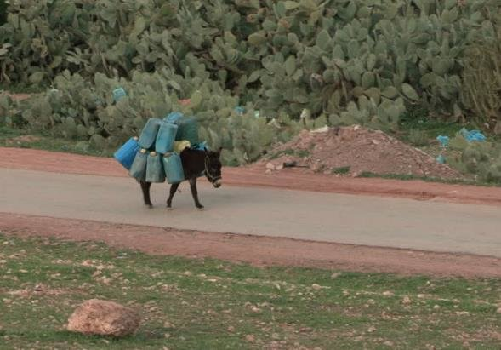
    Algeria has tightened security on its western border with Morocco, establishing 24 new monitoring points to combat smuggling of subsidised food products and fuel, Interior Minister Daho Ould Kablia announced at a press conference on May 13. Ould Kablia slammed what he termed the “passivity” of the Moroccan authorities with regard to cross-border smuggling:
    We are doubly penalized. The smugglers take fuel out of the country and bring drugs in. We are forced to import fuel oil, pending the launch of the four new refineries [that are planned]. […] I raised this issue with my Moroccan counterpart. I told him that if the Moroccan authorities do not make an effort, things will not move forward.
    While the new anti-smuggling measures undoubtedly do constitute a response (albeit an inadequate one) to a very real problem, Ould Kablia’s public grumbling about the attitude of the Moroccan authorities may also be in part politically motivated. As we noted in our last report, the Bouteflika camp, of which Ould Kablia is a key member, has every interest in amplifying traditional points of discord between Algeria and Morocco in order to prevent the question of inter-Maghreb relations and normalisation with Rabat gaining any traction in the run-up the 2014 presidential election. In a telling contrast, at the same press conference Ould Kablia tended to downplay problems on the borders with Libya and Tunisia[6].
    The danger to the east is, however, far greater. Indeed, Algeria’s border with Morocco is in most respects its least troublesome frontier these days, the perennial problem of smuggling notwithstanding. The French-led military intervention in northern Mali has pushed AQMI and its allies right up to the Malian-Algerian border, where incursions and clashes have been frequent. The 1,000 km long border with Libya has theoretically been closed since the war of 2011, but it remains impossible to shut the jihadists out entirely, even after security was supposedly enhanced in the wake of the In Amenas attack. And now the situation in north-west Tunisia is taking a turn for the worse, prompting the Algerian authorities to close the border with Tunisia too.
    Back in December of last year, armed islamists clashed with the Tunisian gendarmerie in Djebel Chaambi, near Kasserine, close to the Algerian border, killing one gendarme and wounding three others. Eleven days later, the Tunisian Interior Minister announced that a training camp “run by three Algerians close to AQMI leader Abou Mossaâb Abdelouadoud” had been discovered in the area; some 16 armed islamists, among them three Libyans, had been arrested, and another 18 were still at large. The jihadist groups were not stamped out, however, and in late April the Tunisian military began a more concerted campaign against the armed groups in Djebel Chaambi and a smaller group further north in Djebel Salloum, also situated along the border. More than a dozen members of the Tunisian national guard and army were wounded, some of them severely, in the first half of May by landmines laid by the group to protect their encampments. 
    Publicly, Tunisian officials say the Djebel Chaambi group numbers no more than 20, a good half of them Algerian. Speaking to us in private, a Tunisian government security official estimated the number of terrorists in the Djebel Chaambi area at “200 individuals of various nationalities, but mostly from northern Mali and Libya”. Tunisian officials have suggested that the armed groups want to use the heavily wooded and inaccessible borderlands as a base for attacks elsewhere, perhaps on targets in Algeria, and although there has been no official confirmation that jihadist groups in north-west Tunisia have launched cross-border raids, it is worth recalling an unusual incident in the north-eastern Algerian wilaya of Khenchela in February, in which by some accounts as many as 50 jihadists, “most of them Tunisians and Libyans”, attempted to storm an Algerian army camp. 
    At the end of April, Gen. Rachid Ammar, chief of staff of the Tunisian armed forces, accompanied PM Ali Laarayedh on a visit to Algiers, during which they met with Gen. Ammar’s opposite number, Lt-Gen. Ahmed Gaïd-Saleh. Flowing from this, a direct line of communication between ground and air operations in Algeria and Tunisia was reportedly set up to facilitate the exchange of information between the security services, while the Algerians presented their plans for expanded aerial surveillance along their eastern border to prevent the infiltration of armed groups as well as weapons smuggling across Tunisia from Libya[7]. By mid-May, the Algerian army had reportedly deployed more than 6,000 troops on the Tunisian border (eight brigades of regular troops and special forces).
    The Tunisian government security official quoted above argues that what the Tunisian and Algerian armies are fighting in north-west Tunisia is:
    the military wing of a broader Salafist-Jihadist movement spanning Tunisian mosques, whose membership is estimated at 35,000 to 40,000. […] In addition to their base camps in the mountains, their activities include recruitment, propaganda and fundraising in mosques. We are in a situation similar to that of Algeria in the early 90s — except that Tunisia is ill prepared to deal with it. Security officials have asked their political superiors to activate the security treaty signed with Algeria in 1983 and the Algerians have replied favourably. They closed their borders and put their intelligence resources (human and technological) at Tunisia’s disposal, but that appears to be insufficient and there is a request underway for Algeria to extend the terms of the 1983 treaty to include cooperation in personnel and materiel. To put it bluntly, we want the Algerians to send us units and equipment to control the whole mountainous border area. The Tunisian army lacks the necessary equipment (anti-mine gear, night-vision, infrared sights, etc), and what it has is old and not serviceable. As soon as the Algerians take charge of the border areas, Tunisian army and security forces units will take care of Salafist-Jihadists inside the country. In addition to the shortage of equipment, Tunisian forces are hampered by a wobbly political class and the lack of a firm grip on domestic threats. It is likely the jihadists will seek revenge for the army’s operations in Djebel Chaambi by carrying out attacks in the cities. The political class and civil society organisations appear to underestimate the threat. 
    If such pessimistic forecasts to the east are even partly confirmed, sections of the Algerian establishment – and notably of the military – are likely to find themselves all the more inclined to appreciate the relative stability of their western neighbour in the coming period.
  • May Algerie monthly report (2/4)

    Political Trends

    On April 27, Algerian President Abdelaziz Bouteflika was airlifted to the Val de Grâce military hospital in Paris after suffering a “transient ischemia” – a temporary blockage of a blood vessel often called a mini-stroke. “The President is in very good health,” his doctor Rachid Bougherbal told the press after the news was announced, adding that the President would return to Algiers “in not more than seven days.” Almost four weeks later, there has still been no sign of Bouteflika and only the scantest of official communications about his condition, and speculation about his real state of health and its political consequences is mounting to fever pitch. 
    One of the earliest rumours had to do with the causes of the President’s cerbrovascular accident. On the very day of his evacuation to Paris, Le Quotidien d’Oran ran a report, widely taken up by other Algerian media, quoting “certain sources close to the presidential circle” as claiming that the stroke occurred after Bouteflika learnt that his influential brother Saïd had been implicated in corruption scandals currently being investigated by the DRS intelligence and security service, forcing the President to dismiss him as an advisor. This story may well be apocryphal – we have had no confirmation from sources at the Presidency that Saïd Bouteflika has been sacked, and an Algerian businessman with family ties to the nomenklatura has expressed doubt that the President would even be capable of such a move, such is the “fusional” relationship between the two brothers – but it is symptomatic of the tense climate generated by the corruption investigations and of the uncertainty that they are generating.
    In our last report, we noted claims in specialist newsletter Maghreb Confidentiel to the effect that Maj-Gen. Bachir Tartag, head of internal security at the DRS, had deliberately orchestrated the corruption investigations in order to “smash the fragile peace between his boss Tewfik[1] and the head of state, cause the Bouteflika clan to implode and prevent the President from running for a fourth term in 2014”. In the absence of confirmation from other sources, we suggested that such claims were nonetheless worth monitoring and testing against the facts as they unfolded. Evidence has since been mounting that the corruption investigations are indeed closely linked to the succession question.
    At least two sources have, over the past month, suggested that – contrary to the 2009-10 crackdown on graft, which appears to have been driven by Bouteflika himself – this time the anti-corruption campaign is very much driven by the DRS. According to a project manager at Sonatrach who has had contact with current and former DRS officers involved in the corruption investigations:
    The DRS says it is concerned about foreign investigations into Algerian affairs: the FBI has opened a preliminary investigation, the British suspect a BVI-registered subsidiary of Sonatrach of tax fraud, the Canadians have begun proceedings against SNC-Lavalin for corruption in its contracts with Sonatrach. But the DRS’ concern is only a pretext, the aim of which is to demonstrate to Bouteflika and his entourage the need to launch a wide-ranging inquiry targeting people close to the President, which could affect him personally. The DRS has been piling on the pressure, instrumentalising this inquiry and the fight against corruption in general to settle two fast-approaching successions: Bouteflika’s and Tewfik’s. For this reason, the inquiry has become a major issue for the DRS. 
    An official at El Mouradia presidential palace adds further detail to the picture:
    Contrary to what has been said in some quarters, Tartag has been chosen by Tewfik, against Bouteflika’s will, as his successor at the head of the DRS.
    The Presidency is mobilising all its resources to keep track of the investigation into corruption at Sonatrach. The DRS has been putting out some worrying signals, and the Presidency is not being kept informed of how the investigation is proceeding. The President is being kept out of the loop, supposedly so as to “spare” him. Aside from the President himself, the DRS is eavesdropping on everybody at the Presidency, where the atmosphere has been toxic since December. 
    Given the prevailing mood in relations between the Presidency and the DRS due to the tug-of-war over the succesion, corruption investigations could go on for months. Tewfik has put people who are close to him in charge of these investigations: aside from Tartag, you also have Generals Gobrini and Djebbar. Virtually all the top brass of the DRS are taken up with the succession question, and the corruption investigations are one symptom of this amongst others. Tewfik’s men want to use these investigations to raise the pressure and force Bouteflika to submit to their will: no fourth term. Tewfik has said that “we’ll settle Bouteflika’s succession first”, implying that he himself will also go once he has taken care of Bouteflika’s succesion. 
    There are at least four points that are worth drawing out of this. Firstly, it would appear that, while he is certainly involved in overseeing the corruption investigations as head of the Directorate of Internal Security, Gen. Tartag is neither the sole driver of the campaign nor acting against Tewfik, but with him. Secondly, the sources seem to believe that Tewfik, who is now 72 and whose health may no longer be what it was, is contemplating his own departure at some point in the future[2]. Thirdly, for the first time in years, it is seriously suggested that Tewfik is not acting in tandem with Bouteflika. And finally, the corruption investigations have a clear political objective: to make it impossible for Bouteflika to stand for a fourth successive term of office.
    In mid-April, it will be recalled, a source with access to both Bouteflika and Tewfik suggested guardedly that Bouteflika had, after months of hesitation, finally made up his mind to stand for a fourth term, while remaining coy as to other players’ stances on this decision. The matter may now have been settled by Bouteflika’s health issues, however. Over the past week, press reports have been increasingly pessimistic: on May 17, French newsmagazine Le Point quoted “concordant” Algerian and French sources as suggesting that the President’s condition
    when he was admitted to Val-de-Grâce was far worse than stated in the official announcement and that “certain vital functions are badly affected”, and on May 19, Algerian French-language daily Mon Journal and its Arabic-language sister publication Jaridati claimed that Boutflika, suffering from cancer as well as immunodeficiency and metabolic problems, had been secretly flown back to Algeria in a coma four days previously[3]. On May 21, French daily Le Parisien quoted a member of the French government as saying that Bouteflika had been transferred from Val-de-Grâce to the Institution Nationale des Invalides, another French military hospital that specialises in treating the war-wounded and the severely handicapped, for “convalescence” (which was later partially confirmed by the French Defence Ministry). 
    To be sure, the official version – as expressed by Prime Minister Abdelmalek Sellal and presidential advisor Farouk Ksentini – remains that Bouteflika the President, “whose life was never in danger and whose health is improving day by day” is resting at his doctors’ insistence but nonetheless “continues to follow the daily operations of government, pending his return to continue his mission in the service of Algeria and the nation”. This is essentially the same line as we had been given, in private, by a staffer at El Mouradia presidential palace since the beginning of Bouteflika’s hospitalisation: the President had suffered a very minor stroke which was by no means life-threatening and had been promptly dealt with, and had been told to rest by his doctors; speaking to us again on May 15, the same source claimed that Bouteflika had made a full recovery and had been due to return that very day, but had postponed “for 24 hours” (the source ventured no explanation for this). But the longer Bouteflika’s return is postponed, the less convincing such reassurances sound.
    Thus, even if Bouteflika is not physically dying, his political death seems increasingly probable. It is telling that – in contrast with his previous hospitalisation at Val-de-Grâce in November 2005 (for a bleeding ulcer), when gushing messages wishing him a speedy recovery and a swift return to his position at the helm of the state were de rigueur for almost all mainstream politicians and parties – Algeria’s political class, and in particular the two main government parties, the RND and the FLN, have this time remained entirely silent throughout his hospitalisation. As if uncertain of what is expected of them, party leaders have been refusing to make the slightest comment on the matter to the press. This is far from the reaction one might have expected had the fourth term been a ‘done deal’ within the ruling establishment. Even more explicitly, former Navy Commander Gen. Mohand Tahar Yala, who last year founded a political grouping he calls the Citizenship Movement, on May 19 penned a violent attack on Bouteflika that was published by Algerian daily El Watan and news portal Algérie Focus, in which he accuses the President of “high treason” for his role in establishing a “predatory” system of corruption that has wasted and pillaged Algeria’s wealth[4] and calls for him to be removed from office immediately[5]. 
    If, on the other hand, Bouteflika’s condition really is as bad as has been suggested, the ruling establishment – and in particular Tewfik and the other senior officers of the DRS, together perhaps with the tops of the military – will have had time to prepare for his disappearance and deal with its consequences. Indeed, if our sources are correct when they suggest that the DRS top brass have been actively striving to prevent Bouteflika running for a fourth term, the most awkward scenario for Tewfik et al might, paradoxically, be for Bouteflika to make a full recovery as promised and return in fighting form.
  • May Algerie monthly situation report (1/4)


    ALGERIA MONTHLY SITUATION REPORT

    Executive Summary

    Political Trends

    ·     Almost a month after he was airlifted to Paris for treatment following a “minor stroke”, there has been no sign of President Bouteflika and speculation as to his condition is rising to fever pitch.

    ·      Bouteflika’s health problems come just as he had made up his mind to run for a fourth successive term of office next year.

    ·      Concordant sources suggest that one of the main aims of the corruption investigations, which are being driven by the DRS, is to prevent Bouteflika from running for a fourth term.

    ·     The question of the fourth term may have been laid to rest by the President’s health problems; paradoxically, the situation may become more complicated if Bouteflika were to make a full recovery and return in fighting form .

    Foreign Relations

    ·     Interior Minister Ould Kablia has announced new security measures along the border with Morocco, and complained bitterly of the Moroccan authorities’ lack of cooperation in combatting smuggling.

    ·      Inclined for domestic political reasons to talk up problems on the border with Morocco, Ould Kablia has tended to downplay far greater threats on Algeria’s eastern borders.

    ·      As they move against jihadist groups in the mountains along the border with Algeria, the Tunisian authorities are appealing for ever greater military assistance from the Algerians.

    ·     A Tunisian security official draws a pessimistic prognosis for the situation in Tunisia, which is compared to Algeria in the early ’90s.

    Security

    ·     Jihadist activity nationwide accelerated markedly in April and early May, with security operations lagging somewhat behind them. There were no incidents in Algiers, however.

    ·      A convoy of Italian expatriate workers has been ambushed in north-west Algeria in what may have been a kidnapping attempt, although none were taken hostage or wounded.

    ·      Repeated acts of car-jacking and brigandry in the Hassi Messaoud area indicate that security is still not optimal around Algeria’s oldest oil hub.

    ·     There have been a number of incursions in the south-eastern oil province of Illizi by small groups of armed men from Libya, including one near In Amenas, and a failed attack on a security  forces convoy transporting jihadist prisoners in the same province.

  • March Algerie monthly report (4/4)

    Security

    Political violence in February was markedly one-sided. The security forces kept up a steady rate of ambushes targeting small groups of jihadists in Kabylia and to a lesser extent other parts of the country[5], while AQMI remained for the most part passive. Overall, the jihadist group took the initiative in only around a third of the 22 incidents recorded in February[6].
    One significant exception to AQMI’s pattern of passivity came early in the month, when a group of “several jihadists” attacked a military camp near Boudoukhan in the wilaya of Khenchela, in the east of the country, on February 5. The group, dressed in military uniforms, commandeered a vehicle used to supply the camp and tried to use it as a “Trojan horse” to infiltrate the facility, provoking a three-hour battle in which at least one jihadist was killed and an unspecified number of soldiers wounded. The army immediately launched a major search and destroy mission in the area to track the group, using helicopter gunships and even jet fighters according to press accounts, and the following day freed a hostage (believed to be the driver of the hijacked vehicle) the attackers had taken with them in their flight. Initial press reports claimed that there had been as many as 50 attackers, “most of them Tunisians and Libyans”[7]; the Algerian Defence Ministry officially denied this in a statement on Feb. 8, saying there no more than “eight criminals” involved. 
    There was also an unusual report of an attempted suicide-bombing in the capital, Algiers, which has not seen any incidents of political violence for a number of years. According to Arabic-language daily Echorouk (Feb. 28), the security forces, expecting terrorist acts against French interests in the capital following France’s military intervention in Mali, tightened their surveillance of jihadist activity and towards the end of February discovered a plot to suicide-bomb a “civil security centre” in the Bab el-Oued district; when apprehended in a mosque the would-be bomber “was already wearing his suicide belt”, but the security forces “managed to immobilise him” before he could detonate it, claimed the daily. 
    Although this story should be viewed with some caution (Echorouk, which has a tendency to sensationalism and cannot be considered an entirely reliable news source, was the only newspaper to carry it), the reference to the potential threat to French interests in connection with the war in Mali does nonetheless raise the serious question of whether and how AQMI in northern Algeria will take part in the “revenge” operations promised by Mokhtar Belmokhtar following the bloody denouement of the In Amenas siege, and more broadly in supporting its comrades-in-arms who are battling French and allied African forces in the Malian Sahara. Documents allegedly found in Timbuktu after it was taken back from the jihadists in late January[8] indicate that ties between AQMI’s two branches — the Kabylia-based arm which comprises the central leadership and the Saharan branch in northern Mali — are closer than seemed to be the case, with AQMI’s national emir Abdelmalek Droukdel (a.k.a. Abou Mosab Abdelwadoud) effectively laying down the line for the southern branch. And yet, two months after the beginning of France’s Operation Serval in northern Mali, AQMI in northern Algeria has largely kept quiet, or even reduced its activity. This may be due to pressure from the security forces, pre-emptively stepping up their harassment of jihadists in the north of Algeria with constant search and destroy missions and ambushes of isolated jihadists, and/or the effects of harsh winter weather on AQMI’s depleted forces. However, AQMI theoretically still has the option of suicide bombings, which are more difficult to prevent by means of classic military operations, and it cannot be entirely ruled out that the French war in Mali might provides the context for a suicide strike against French interests or symbols of the Algerian state and military in northern Algeria. 
    In the oil producing regions of the south, there was one minor incident on February 2, when a group of armed men “believed to be bandits” hijacked a 4WD vehicle belonging to an Italian company “working in the oil industry”. The assailants beat up the occupants of the car — none of them expats — and held them hostage for some time before letting them go and making away with the car. The fact that armed men on pick-up trucks could still roam the areas around Hassi Messaoud suggests that security of Algeria’s oil and gas sites was still not optimal more than a fortnight after the In Amenas incident. There have since been reports that the security forces have beefed up their presence beyond the perimeters of oil and gas facilities and suggestions that foreign oil companies will no longer be allowed to employ local private security firms for facilities protection, in which role they are supposedly to be permanently replaced by the army. On Feb. 20, Energy Minister Youcef Yousfi, speaking at a forum organised by government-owned daily Echaâb, indicated that the Ministry of Energy and Mining was still in discussions with the DRS and the army concerning the oil and gas industry’s security needs.
    Two incidents were reported on the borders with Libya. On February 16 the security forces detected an off-roader that was trying to cross into Algeria from Libya near In Amenas, wilaya of Illizi, and launched an operation to intercept it. Two “terrorists”, one Libyan and one Egyptian, and a third unidentified individual were killed in the operation. Echorouk (17/2) said these jihadists are believed to have fled from Mali to Libya with the beginning of the French intervention there. For its part, El-Khabar (28/2) reported that security forces had on Feb. 26 arrested four men in an off-roader as they tried to cross into Algeria from Libya near Djanet, also in the wilaya of Illizi. The vehicle bore no registration plates and the men, dressed in military uniforms, carried two machine guns. They claimed to have lost their way while on a hunting trip.
    Algeria’s southern border saw three incidents early February but no further clashes have been reported since Feb. 16[9]. On February 1 security forces intercepted an armed group travelling in three off-roaders as they tried to cross into Algeria from Niger near In Guezzam, in the south of the wilaya of Tamanrasset. Helicopter gunships were used in the operation. Two “terrorists” were killed and ammunition and a number of weapons and satellite phones recovered. On Feb. 8 the Algerian army “eliminated” two jihadists who were trying to cross the border with Niger in the south of the wilaya of Tamanrasset to “deliver a shipment” of weapons. They were found to be carrying machine guns and communications gear. On Feb. 11 El-Khabar said that security forces on February 9 intercepted three individuals smuggling weapons from Mali in the area between Tin Zaouatin and Bordj Baji Mokhtar. They were carrying machine guns and ammunition and “admitted working for Mujao[10]”. And on February 15, security forces, acting on intelligence, tracked and intercepted a jihadist group near Bordj Baji Mokhtar in the south of the wilaya of Adrar, on the border with Mali. After a “three-hour chase” the security forces killed four of the jihadists, believed to belong to Ansar Dine, and forced three others to flee into Mali. Five machine guns were recovered.
    In northern Mali, meanwhile, French and Chadian forces continue to battle jihadists in the Adrar des Ifoghas uplands, which run right up to the Algerian border where they merge into the foothills of the Hoggar. In late February it was reported that Abdelhamid Abou Zeid, emir of AQMI’s Katiba Tarek Ibn Ziad and one of the organisation’s top three commanders in Mali, was killed in a French air raid on or around February 25. A week later, Chadian sources claimed that their forces had killed Mokhtar Belmokhtar, commander of AQMI’s Masked Men Brigade which carried out the In Amenas raid. French official sources say news of Abou Zeid’s death appears to be credible, pointing to posts on jihadist forums that admit he was “martyred”, but are more sceptical of reports of Belmokhtar’s death. 
    Meanwhile French military commanders say their forces fighting in the Adrar des Ifoghas have discovered “terrorism infrastructure on an industrial scale” in the area and weapons in very large quantities, including armoured vehicles, artillery pieces and other heavy weapons, but no manpads. According to a usually well-informed French journalist and defence analyst, French forces “have found no surface-air missiles in working condition” in the arsenal the jihadists left behind, and there have as yet been no reports of such weapons being used against French aviation in the conflict.
    END
    Ambassador Edward M. Gabriel
    President and CEO
    The Gabriel Company, LLC
    1220 L Street NW, Suite 411
    Washington DC, 20005
    Phone: +1 202.887.1113
    Fax: +1 202.887.1115
    [1] Cherdima, a particularly derogatory word in Algerian colloquial Arabic – which the Prime Minister’s spokesmen have since tried to deny he ever used.
    [2] Significantly, banners reading “national unity is a red line [not to be crossed]” were raised at the Ouargla demonstration on March 14.
    [3] Now being referred to as the ‘Sonatrach II case’. The first investigation into corruption at Sonatrach, which led to the conviction of the company’s CEO Mohamed Méziane and most of its top management, was launched in 2010.
    [4] Founded by Abdelmoumen Rafik Khalifa in 1998, El Khalifa Bank, one of the first private banks in Algeria, enjoyed a meteoric rise during Bouteflika’s first term of office thanks in part to its management of the accounts of several large, government-related institutional clients, before abruptly hitting a wall and going into liquidation. Having fled to London, Abelmoumen Khalifa was tried in absentia in 2007 along with over 100 other defendants and sentenced to life imprisonment for corruption, abuse of trust, forgery and criminal association. Widespread suspicions that he had been ‘covered’ for years by the regime and that members of Bouteflika’s entourage had profited directly or indirectly from embezzlement at his bank were swept under the carpet.
    [5] Seven incidents reported in AQMI’s Kabyle heartland in February; one in Algiers; five in the eastern wilayas of Batna, Tebessa and Khenchela; two in the western wilaya of Chlef; five in the south, mostly on the borders. 
    [6] So far in March five incidents all told, including two AQMI operations, have been registered.
    [7] Following the Algerian authorities’ assertion that as many as 11 of the In Amenas attackers were Tunisians, and in light of the ongoing instablility in Libya and Tunisia, rumours of Libyan and Tunisian nationals being involved in attacks in Algeria are likely to be a recurrent theme in Algerian media reporting over the coming period. It is not yet possible to state with any certainty, however, that Tunisian and Libyan fighters are present in any significant numbers in AQMI’s ranks in northern Algeria. 
    [8] Radio France International and French daily Libération (25/02/13) give an account of a document entitled ‘Roadmap relating to Islamic jihad in Azawad’, signed
    by Abdelmalek Droukdel and dated 20 July 2012, which summarises internal discussions about the way forward for AQMI in building an Islamic state northern Mali, managing its relations with Ansar Dine and the MNLA. A fortnight earlier, Britain’s Daily Telegraph (13/02/13) published what it claims were partial minutes of a meeting of AQMI’s leadership, held under the command of Droukdel on 18 March 2012, covering similar themes. 
    [9] With a war on the other side of the southern border which has already leaked into Algeria through its eastern border, there is clearly a big effort by the Algerian authorities to keep the borders, especially in the south, closed and keep infiltrators out. The relative lack of reporting since Feb. 16 does not necessarily mean a lack of incidents, since information appears to be controlled and some activity is likely not to be reported in the press.
    [10] The Movement for Unicity and Jihad in West Africa, a group which split off from AQMI’s southern units in mid-2011 but continues to work closely with its parent organisation.
  • Sahara Occidental : La guerre va s’installer dans la durée

    Plusieurs hauts responsables et diplomates sahraouis sont montés au créneau pour faire le point sur la situation au Sahara et apporter de précieuses informations sur l’offensive au quotidien des unités combattantes de l’Armée populaire de libération sahraouie (APLS).

    Intervenant à la chaîne1, de la radio nationale, l’ambassadeur de la Rasd, Abdelkader Omar a souligné que le Front Polisario, après ses nombreuses mises en garde et sa saisine répétée de l’ONU est désormais convaincu que « l’action armée fera la différence dans sa lutte contre l’occupation marocaine qui a transgressé l’accord de Cessez-le-feu en vigueur depuis 1991 dans la zone d’El-Guerguerat. Il a rappelé la part de responsabilité de l’ONU et son immobilisme dans la dégradation de la situation. L’invité de la matinale de la radio a indiqué que « le Front Polisario est arrivé au constat après une longue attente, que l’action armée est le seul moyen qui peut faire bouger la situation de statu quo et du mépris par le Maroc des résolutions internationales sur son occupation coloniale du Sahara occidental . Le diplomate sahraoui a insisté sur le fait que « le Front Polisario a mis en garde l’ONU sur les intentions marocaines. Il a souligné que « le peuple sahraoui est déterminé à mener la guerre et faire des sacrifices pour défendre sa cause ». Il a rappelé également que la fin du cessez-le-feu décrété officiellement par le président Brahim Ghali est intervenue après l’agression menée par l’armée marocaine à Guerguerat contre des civils sahraouis bloquant pacifiquement la brèche opérée dans le mur de défense marocain. « Cette agression a marqué la fin de l’accord qui avait été conclu 29 ans auparavant sous l’égide des Nations unies et nous n’avons cessé de mettre en garde contre le comportement inadmissible du Maroc qui, pendant toutes ces années, n’a rien fait d’autre que de tenter de nous mettre, de mettre le monde entier, devant le fait accompli. »
    Dans plusieurs déclarations à la presse nationale, l’ambassadeur sahraoui a estimé que le « Maroc a mis fin au plan de paix, créant une toute nouvelle situation avec la reprise de la guerre . » Il a indiqué aussi que pour informer de la situation au jour le jour, des communiqués militaires sont publiés. L’armée sahraouie a riposté et l’armée marocaine, mise en état d’alerte, est paniquée par la multiplication des attaques tout au long du mur de défense marocain. « Nous savons que la réaction de notre armée a produit un effet psychologique inattendu et a causé des pertes matérielles, humaines et des dégâts importants.» « La paix dont ils jouissaient est terminée, la guerre a repris et il est clair que ses répercussions se feront rapidement ressentir au sein du Maroc où la situation n’est guère reluisante. Elle aura inévitablement des retombées sociales et économiques qui vont compliquer la situation chez eux ». 
    Le Maroc a tout fait pour qu’on en arrive à cette « nouvelle étape, il a défié, méprisé le plan de paix, les lois définies par le cadre juridique mis en place par la communauté internationale, il a fait la sourde oreille aux appels aux négociations, refusé le référendum d’autodétermination, et en face personne n’a rien dit, rien fait, ils se sont contentés de laisser sur place la Minurso (Mission des Nations unies pour le référendum au Sahara Occidental). Il a déclaré que sur place le rôle de la MINURSO n’a plus « lieu d’être. » Pour le diplomate sahraoui, depuis son déploiement, la Minurso a cautionné le « fait accompli du Maroc et rien d’autre, rien d’autre. À présent, la guerre a repris, ils n’ont plus rien à faire sur place ». « Le Maroc a méprisé tout le monde. Il se croyait tout permis. L’absence de réactions l’a encouragé dans ses dérives et, nous ne le dirons jamais assez, la France a la plus grande part de responsabilité dans cette situation. Elle avait un discours, mais agissaient inversement en soutenant toutes les démarches marocaines. Il y a aussi les pays du Golfe qui l’ont et continuent de le soutenir en ouvrant des +représentations diplomatiques+, en l’aidant dans sa politique du fait accompli. Ce qui a poussé le Maroc a rompre le cessez-le-feu », a-t-il dit.
    Il a indiqué, par ailleurs, que la population sahraouie a réagi de manière extraordinaire aux actions militaires de son armée nationale. « Elle est très satisfaite de voir la situation bouger. Notre peuple a énormément souffert et attendu en vain que le plan de paix soit appliqué, qu’un référendum soit organisé, que la solution pacifique ait lieu, mais rien de cela n’est arrivé. Les années sont passées sans qu’aucune évolution ne soit enregistrée dans ce sens.» « La population et les jeunes en particulier ont adressé des critiques aux responsables. Ils considéraient que cette attente était une véritable perte de temps, ils ont vu que l’ONU n’avait pas assumé ses responsabilités, que tout le monde se taisait devant la politique du fait accompli marocain. Aujourd’hui ils sont heureux de pouvoir défendre leur patrie. »
    M. B.
  • «Point de non-retour»: le Sahara occidental déclare la fin de la trêve de 30 ans

    Le Front Polisario du Sahara occidental a déclaré à VICE World News que le groupe indépendantiste avait déclaré une «guerre à grande échelle» contre le Maroc, qui occupe la majorité du territoire contesté.

    Le Front Polisario indépendantiste au Sahara occidental a mis fin à un cessez-le-feu vieux de 30 ans avec le Maroc, relançant l’un des conflits les plus gelés au monde.
    Les tensions se sont intensifiées au cours des dernières semaines dans la “zone tampon” désignée par les Nations Unies, à la suite d’accusations de violation de la trêve de trois décennies des deux côtés.
    “Nous avons déclaré une guerre à grande échelle contre les occupants [le Maroc] du Sahara occidental. L’armée marocaine a enfreint les termes de l’accord de paix à plusieurs reprises, et nous avons atteint un point de non-retour. lutte armée jusqu’à ce que la communauté internationale intervienne et fournisse une solution immédiate et définitive au problème. ” Le Dr Sidi Omar, le représentant du Front Polisario à l’ONU, a déclaré à VICE World News.
    “Les habitants du Sahara occidental en avaient assez des jeux joués par le gouvernement marocain ne respectant pas les conditions convenues dans l’accord de 1991, et de tenir un référendum l’année suivante sur le sort de notre peuple, ce qui ne s’est jamais produit.”
    Le Sahara occidental, foyer de l’ethnie nomade sahraouie, est un territoire disputé abritant plus d’un demi-million de personnes sur la côte de l’océan Atlantique qui s’étend entre le Maroc, la Mauritanie et l’Algérie. Environ 80% du territoire est administré par le Maroc sous la supervision de la mission de maintien de la paix de l’ONU.
    Le Front Polisario s’est battu contre l’Espagne et a déclaré son indépendance sous le nom de République arabe sahraouie démocratique (RASD) en 1976, mais cela a été rapidement suivi d’une guerre contre l’armée marocaine pendant plus de 16 ans, se terminant en 1991 par le cessez-le-feu négocié par l’ONU.
    Des dizaines de milliers de personnes ont dû fuir le conflit et vivent désormais dans des conditions difficiles dans des camps de réfugiés à Tindouf, en Algérie.
    Des affrontements mineurs ont eu lieu au cours des dernières années le long de la berme de 2700 km de long – un mur principalement construit en sable qui sépare le Sahara occidental sous administration marocaine du reste du territoire.
    Vendredi, le gouvernement de Rabat a annoncé une “opération militaire” pour “mettre fin à l’état d’obstruction résultant de ces mouvements et rétablir la liberté de circulation civile et commerciale”. En réponse, un groupe de civils et d’activistes sahraouis s’est rassemblé près de la ville de Guerguerat, dans le coin sud-ouest du Sahara occidental, et a bloqué la seule route reliant le Maroc à la Mauritanie et au reste de l’Afrique.
    Brahim Ghali, le président de la RASD, a signé un décret déclarant la guerre. Il a accusé le Maroc de “déclencher la guerre” et a écrit dans une lettre à l’ONU que les récentes escalades “ont sérieusement sapé non seulement le cessez-le-feu et les accords militaires connexes, mais aussi toutes les chances de parvenir à une solution pacifique et durable de la question de la décolonisation du Sahara occidental. . “
    L’ONU a déjà pris “de multiples initiatives pour éviter une escalade”, a déclaré le porte-parole de l’ONU, Stéphane Dujarric.
    Le Secrétaire général reste déterminé à faire tout son possible pour éviter l’effondrement du cessez-le-feu qui est en place depuis le 6 septembre 1991, et il est déterminé à faire tout son possible pour lever tous les obstacles à la reprise du processus de paix, », a ajouté Dujarric.
    Source : vice.com, 16 nov 2020
    Tags : #Sahara Occidental, #Polisario #Maroc #ONU #MINURSO
  • Maroc : Gare aux voix soutenant l'autodétermination au Sahara Occidental

    LE MAKHZEN CIBLE LES VOIX LIBRES AU MAROC : Toute expression soutenant le droit international est à bannir

    Le parti d’opposition marocain « Annhj Addimocrati » a exprimé sa position de principe sur la cause juste du peuple sahraoui, réitérant sa posture en faveur du droit du peuple sahraoui à l’autodétermination, en réaction aux derniers évènements survenus à El-Guerguerat, suite à la violation par le Maroc de l’Accord du cessez-le feu de 1991, qu’il a signé sous l’égide des Nations unies avec le Front Polisario. Le secrétariat général du parti d’opposition marocain, Annahj Addimocrati, affirmant sa position en faveur du droit du peuple sahraoui à l’autodétermination à la suite de l’agression militaire marocaine à El-Guerguerat, a appelé, dimanche dernier « à éviter l’escalade » car, d’après ce parti, « le conflit comporte des dangers pour la région et ses peuples ». 
    La position de ce parti marocain progressiste a encore une fois, suscité le déchaînement non seulement de la presse aux ordres du Palais mais aussi des voix du Mahkzen, considérant la position du parti Annahj Adidimocraty comme « déclaration de trahison » selon leurs propos. Il est à rappeler que quelques années avant son décès, l’homme fort du Roi Hassan l’ex-ministre marocain de l’Intérieur, Driss Basri, alors en retraite, avait déclaré que « l’indépendance du Sahara occidental est une question de temps » et qu’il était en faveur « de la tenue du référendum d’autodétermination du peuple sahraoui ».
    Les déclarations de l’ex-puissant ministre de l’Intérieur durant le règne du père du Roi Mohamed VI, avait affirmé, sa position précitée, sur le Sahara occidental, dans des médias étrangers, notamment au quotidien espagnol La Razon, au moment où le royaume chérifien, entamait sa campagne en faveur « de l’autonomie » dès 2004, laquelle proposition de Mohamed VI est en opposition de ce que dicte la légalité internationale concernant le Sahara occidental, question de décolonisation inscrite à l’Onu depuis 1966. La presse marocaine avait accusé Driss Basri de tous les maux, usant même «de félonie» dans bon nombre de ses titres. 
    La position exprimée par le parti progressiste marocain, lequel subit un blakout pesant des médias marocains, notamment sur ses analyses et positions sur les questions liées à la vie socio-économique et politique marocaine et également sur sa position sur la question du Sahara occidental, conforme aux principes et textes de la Charte de l’ONU et des résolutions dont la 1514, relative aux droits des peuples à disposer d’eux-mêmes. La presse marocaine qui s’est attaquée au parti progressiste, notamment sur le fait qu’il use du Sahara occidental et non de ce qui est sacré pour le Palais royal et le Makhzen, le Sahara «marocain», fait semblant d’ignorer que le Maroc siège à l’UA, Institution continentale comptant parmi ses membres fondateurs la République arabe sahraouie démocratique, et siège à l’ONU, où le Front Polisario a ses représentants, comme ceux aussi auprès de l’UE pour ne citer que ces cas de figure.
    Karima Bennour
    Tags : Sahara Occidental, Maroc, Annahj Addimocrati, La Voie Démocratique, 
  • Sahara Occidental : L'ONU confirme les accrochages entre le Maroc et le Polisario

    Dans le point de presse quotidien, le porte-parole du secrétaire général de l’ONU a confirmé lundi l’existence d’affrontements armés entre le Front Polisario et le Maroc.

    A la question de “pouvez-vous confirmer, sur le Sahara occidental, un échange de tirs entre les deux parties?”, Stephane Dujarric a répondu que “la Mission, la MINURSO [Mission des Nations Unies pour l’organisation d’un référendum au Sahara occidental], a reçu des rapports des deux parties faisant état d’incidents de tirs de nuit dans le territoire à divers endroits le long de la berme. La Mission continue d’exhorter les parties à faire preuve de retenue et à prendre toutes les mesures nécessaires pour désamorcer les tensions, et nos collègues sur le terrain au Sahara occidental continuent de suivre la situation de très près. 
    Le même journaliste qui a posé cette question a indiqué que “que ce serait bien si nous pouvions également avoir un contact avec la MINURSO, je veux dire même pour les journalistes au Maroc, car il est très difficile d’avoir des informations de leur part”. 
    “D’accord. Bien reçu”, a répliqué le responsable onusien.
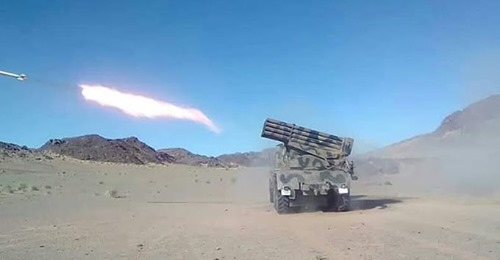
    Pour rappel, dans un quatrième communiqué de guerre, le Front Polisario a fait part de nombreux attaques de ses forces contre le mur de défense marocain à Mahbes, Farsia, Haouza, Oum Legta, Galb Diret, Amgala, Aousserd, Oum Dreiga El Guerguerate, etc…
    Tags : Sahara Occidental, Maroc, Polisario, ONU, MINURSO, 
  • L’Espagne donne au Maroc 130 véhiules pour le contrôle de l’immigration

    L’Espagne livrera 130 véhicules au Maroc pour le contrôle des frontières et de l’immigration

    La valeur de l’offre est de plus de 8 millions d’euros et a été publiée par le biais de la Fondation internationale et ibéro-américaine pour l’administration des politiques publiques
    par Alicia Martínez
    L’Espagne va livrer 130 véhicules de grille au ministère marocain de l’Intérieur pour renforcer le contrôle des frontières et de l’immigration à un moment où les îles Canaries connaissent leur pire crise migratoire depuis 2006. L’appel d’offres, qui a été publié par le biais de la Fondation Internationale et Ibéro-Américaine pour l’Administration des Politiques Publiques (FIIAPP), il a une valeur de 7150.000 euros hors TVA (soit 8651500) et comme on peut le lire sur la plateforme de contractualisation, cet achat est encadré dans le cadre du «Projet d’appui à la gestion intégrée des frontières et des migrations au Maroc». De même, les véhicules doivent avoir une garantie technique et seront livrés à Rabat. En outre, l’Espagne offrira un service de formation à l’entretien des véhicules et ouvrira la possibilité d’apporter des améliorations à ces derniers. Le contrat soumis a une durée de 12 mois et sa prolongation n’est pas prévue.
    Le programme «Appui à la gestion intégrée des frontières et des migrations au Maroc» a débuté le 17 avril 2019 et devrait se terminer le 17 avril 2022. Inclus dans le fonds fiduciaire de l’UE pour l’Afrique Au nord, l’objectif «est d’atténuer les vulnérabilités liées à la lutte contre la migration irrégulière». Les résultats qu’ils recherchent sont d’améliorer les compétences opérationnelles en matière de surveillance des frontières (terrestres et maritimes), de lutter contre le trafic de migrants et la traite des êtres humains, ainsi que d’améliorer la coopération interinstitutionnelle et transfrontalière dans le domaine de la migration irrégulière. La Commission européenne est celle qui finance ce projet avec un montant de 44 millions d’euros. 
    Dans le cahier des charges de ce projet de livraison de véhicules, il a été convenu avec le Maroc de livrer sept lots comprenant un premier de 230 véhicules 4 × 4 tropicalisés, un second de 10 véhicules 4 × 4 en configuration ambulance, un tiers de 100 Camionnettes 4 × 4, un quart de 10 camions-citernes à eau 4 × 4, un cinquième de 8 camions-citernes à essence, un sixième de 18 camions à plate-forme 4 × 4 et un septième de 8 camions frigorifiques. Le cahier des charges comprend également le transport de ceux-ci, le service de maintenance au Maroc et la formation pour la réparation de ceux-ci et leur utilisation.
    Source : El Faro de Melilla, 11 nov 2020
    Tags : Maroc, Espagne, migration,
  • L'Espagne donne au Maroc 130 véhiules pour le contrôle de l'immigration

    L’Espagne livrera 130 véhicules au Maroc pour le contrôle des frontières et de l’immigration

    La valeur de l’offre est de plus de 8 millions d’euros et a été publiée par le biais de la Fondation internationale et ibéro-américaine pour l’administration des politiques publiques
    par Alicia Martínez
    L’Espagne va livrer 130 véhicules de grille au ministère marocain de l’Intérieur pour renforcer le contrôle des frontières et de l’immigration à un moment où les îles Canaries connaissent leur pire crise migratoire depuis 2006. L’appel d’offres, qui a été publié par le biais de la Fondation Internationale et Ibéro-Américaine pour l’Administration des Politiques Publiques (FIIAPP), il a une valeur de 7150.000 euros hors TVA (soit 8651500) et comme on peut le lire sur la plateforme de contractualisation, cet achat est encadré dans le cadre du «Projet d’appui à la gestion intégrée des frontières et des migrations au Maroc». De même, les véhicules doivent avoir une garantie technique et seront livrés à Rabat. En outre, l’Espagne offrira un service de formation à l’entretien des véhicules et ouvrira la possibilité d’apporter des améliorations à ces derniers. Le contrat soumis a une durée de 12 mois et sa prolongation n’est pas prévue.
    Le programme «Appui à la gestion intégrée des frontières et des migrations au Maroc» a débuté le 17 avril 2019 et devrait se terminer le 17 avril 2022. Inclus dans le fonds fiduciaire de l’UE pour l’Afrique Au nord, l’objectif «est d’atténuer les vulnérabilités liées à la lutte contre la migration irrégulière». Les résultats qu’ils recherchent sont d’améliorer les compétences opérationnelles en matière de surveillance des frontières (terrestres et maritimes), de lutter contre le trafic de migrants et la traite des êtres humains, ainsi que d’améliorer la coopération interinstitutionnelle et transfrontalière dans le domaine de la migration irrégulière. La Commission européenne est celle qui finance ce projet avec un montant de 44 millions d’euros. 
    Dans le cahier des charges de ce projet de livraison de véhicules, il a été convenu avec le Maroc de livrer sept lots comprenant un premier de 230 véhicules 4 × 4 tropicalisés, un second de 10 véhicules 4 × 4 en configuration ambulance, un tiers de 100 Camionnettes 4 × 4, un quart de 10 camions-citernes à eau 4 × 4, un cinquième de 8 camions-citernes à essence, un sixième de 18 camions à plate-forme 4 × 4 et un septième de 8 camions frigorifiques. Le cahier des charges comprend également le transport de ceux-ci, le service de maintenance au Maroc et la formation pour la réparation de ceux-ci et leur utilisation.
    Source : El Faro de Melilla, 11 nov 2020
    Tags : Maroc, Espagne, migration,