Category: Morocco

  • November Algeria report (2/4)


    Political Trends

    The surprise attack on the Sonatrach-BP-Statoil gas facility at In Amenas in the southern Algerian province of Illizi on January 16 is a unique and unprecedented event: not only does it represent the first direct attack on hydrocarbons production facilities in Algeria since the islamist insurgency broke out 21 years ago, it is without a doubt the worst terrorist incident at an oil or gas installation anywhere in the world in the history of the industry. With Minister of Communication Mohand Oussaïd Belaïd now casting it as “Algeria’s 9/11”, it is worth considering how the In Amenas siege might affect relations and the balance of power between the key members of the country’s leadership – President Bouteflika, intelligence chief Mohamed ‘Tewfik’ Médiène and the heads of the army – all the more so in light of earlier claims that Tewfik had been unsettled to see Western powers dealing primarily with CoS Lt-Gen. Ahmed Gaïd-Saleh rather than him when discussing how to handle crisis in northern Mali[1], to which of course the In Amenas attack is linked.

    The public blame game following the In Amenas attack has naturally been more muted than it might have been in a fully functioning democracy, with the result that indicators as to how the incident is affecting relations at the top are partial, fragmentary, and to some extent contradictory. On the one hand, while local and international news media (and the Algerian Defence Ministry’s own website) have tended to highlight the role of the army’s special forces in putting an end to the In Amenas hostage crisis[2], a source close to the commanders of the DRS intelligence and security service tells us that President Bouteflika from the outset entrusted control over operations to the DRS, which kept the President informed throughout. This would seem to imply that, behind the scenes, Tewfik has the upper hand over the military chiefs, while at the same time holding onto an important card in his relationship with Bouteflika insofar as he is entrusted with the task of channelling critical information to the President.

    On the other hand, the Algerian press has in general been very supportive of the army’s role, with most media strongly defending both the refusal to negotiate with the armed group that had seized control of the site and the uncompromising military assault that put an end to the siege, and to the extent that there has been any questioning in the Algerian media, it has tended largely to focus on how the attack could have happened in the first place – the unspoken charge being that In Amenas could only have occurred because of a catastrophic intelligence failure. In this vein, leading Arabic-language daily Al-Khabar (Jan. 21) claims that President Bouteflika had ordered an investigation into how AQMI was able to take over the In Amenas facility. This of course lays the blame implicitly at the door of the DRS. Meanwhile, a source at the Presidency has been hinting that Tewfik is no longer the pivotal figure he once was. If this is so, it may be the result of a longer-term decline in power rather than a direct consequence of the In Amenas episode, but insinuations about his services’ lack of efficacy in defending the country’s vital infrastructures against terrorist attack will do nothing to enhance Tewfik’s standing.

    At the same time, there has been open criticism, especially in the Algerian French-language and online media, of Bouteflika’s role, or rather his absence, during and after the In Amenas crisis. Having received Malian Prime Minister Diango Cissoko on Jan. 14, two days before AQMI’s attack on the In Amenas facility, Bouteflika disappeared from public view for a full fortnight, reappearing on Jan. 28 to welcome the Spanish Defence Minister. Bouteflika’s failure to address the nation at the height or in the immediate aftermath of the crisis was seen as a sign of “contempt” for the people by some press commentators, while others suggested that the President had not been seen or heard because he was in Geneva for medical treatment[3]. This latter explanation – a recurrent rumour – appears to be untrue: a senior civil servant at the Presidency tells us that Bouteflika is “in good health” and had not of late been noticeably absent from the El Mouradia presidential palace[4]. Indeed, however much criticism might be piled upon him beyond the walls of El Mouradia, within the inner workings of the Algerian political system Bouteflika still seems to be in control.

    Above all, the President appears to have the upper hand with regard to the upcoming presidential contest – more so, it would seem, than intelligence chief Tewfik, who had previously been held to be the king-maker. One source at the Presidency suggests, almost off-handedly, that the current most likely candidate to take over from Bouteflika in 2014 is Prime Minister Abdelmalek Sellal – a long-standing and reliable supporter of Bouteflika who is also understood to be close to Tewfik, but who has not hitherto been thought of as having either the ambition or the stature to become President. At the same time, however, the option of Bouteflika himself standing for a fourth successive term of office has still not be been definitively rul
    ed out, and it seems unlikely that any firm decision will be possible at least until the dust has settled from In Amenas, and possibly not before there is clearer visibility with regard to the implications for Algeria of the broader conflict in northern Mali.

  • November Algeria report (1/4)


    ALGERIA MONTHLY SITUATION REPORT

    February 8, 2013

                         Executive Summary

                            Political Trends

    ·     Although there have been suggestions that DRS commander Tewfik may no longer be as pivotal a player as he once was, the DRS is understood to have been put in command of operations at the In Amenas siege and to have responsibility for channelling critical information to President Bouteflika.

    ·     The press has been strongly supportive of the army’s intervention at In Amenas, but has implicitly questioned the possible shortcomings of the DRS in preventing the terrorist take-over of the gas facility, which may be damaging for Tewfik.

    ·     Rumours that Bouteflika was in Geneva for medical treatment during the In Amenas crisis appear to be untrue. The President is reported to be in good health and the main arbiter in the forthcoming presidential contest.

    ·     Although the possibility of Bouteflika himself running for a 4th term of office has still not been ruled out, PM Abdelmalek Sellal is now being mentioned as a possible successor.

                            Foreign Relations

    ·     The In Amenas attack was launched in retaliation for Algeria’s assistance to the French war effort in northern Mali, which includes efforts to cut off AQMI’s access to fuel as well as authorising French air force overflights.

    ·     The In Amenas attack and the earlier islamist offensive in Mali initially put the Algerian regime on the back foot, stoking its fears of losing all control over the Sahara, exposing its collaboration with France and putting its relations with countries whose nationals were among the hostages under strain.

    ·     Algiers appears however to be bouncing back, earning respect for its tough response, securing a security cooperation agreement with the UK and pressing for transfers of sensitive military and security technology.

                            Security

    ·     The In Amenas crisis dominated reporting of security news in January, possibly crowding out other incidents.

    ·     In Amenas was the first ever direct attack on oil and gas production facilities in Algeria since the outbreak of violence in 1992.

    ·     The opportunistic attempt by AQMI and its allies to build an ‘Islamic emirate’ in northern Mali brought them into direct conflict with France, transforming AQMI’s strategic orientation and recasting Mokhtar Belmokhtar as the new face of the global jihad.

    ·     The attacks of AQMI’s Saharan branch on Algerian interests are subsidiary to its struggle with France, but it remains to be seen whether or not the national leadership in the north of the country will adopt this orientation.

  • Social Security taxes : Totalization agreement

    A memo sent to you on February 17th regarding a proposal to address the double taxation question with regard to social security taxes between our two countries. Included in this analysis is a list of countries that have totalization agreements with the US and the ones Morocco has with other countries. There is a growing list of US companies that view this issue as an impediment to their decision to send US employees to Morocco to work on projects in Morocco. Do you have any interest to pursue this further with US companies and if so, could you give us an idea of whether there is an interest in Morocco to pursue an agreement with the US? There are several US companies waiting to make corporate joint venture decisions with Moroccan companies and any signal I could pass on from you would be appreciated. Thank you for your time and consideration of this request and sorry I forgot to bring it up last week when we were together.

    I know the importance of this matter and I mentioned it in many of my contacts here. I have invited more than one month ago my ministry to work on a draft to propose to our american partners. I worked on models already signed with other countries.
    The only problem is that these kind of agreements take some time because many administrations are involved.
    By the way there was no meme attached.
    It would be helpful to understand steps as we move forward so we can keep our the companies informed, and be able to provide a general understanding to them regarding progress, obstacles etc. Also, when appropriate I can have them meet with you on this subject to convey their direct interest and a sense of the problem. You also said in the email, “By the way there was no meme attached”. Do you mean the names of companies that have an interest in this subject? There are several companies/institutions which I can reveal at an appropriate time and also provide you with a list of more companies interested in joining in support. 
    Tags : Morocco, USA, cooperation, social security taxes,
  • Morocco / United States Strategic Partnership

    Subject 
    Planned actions 
    Political dialogue 
    High-level political dialogue: 
    Secretary of State and Minister of Foreign Affairs and Cooperation to meet once a year in Washington or in Rabat. 
    Share assessment and analysis on : 
    regional issues such as African Affairs, Middle East Peace Process, Maghreb, Sahel-Saharan region 
    multilateral issues such as Peace Keeping, Terrorism, Environment and Human Rights. 
    Coordinate actions at the UN and other international forums 
    Human rights dialogue: 
    Strengthening of the existing Human rights dialogue and extending it to thematic meetings on Press freedom, civil society, freedom of speech, etc. 
    Extension of the dialogue to cooperation, capacity building and exchange of best practices. 
    Regional cooperation 
    Morocco/US cooperation in the MENA region: 
    Morocco provides experts and advisors on developing civil society and political cooperation (regional training center for Governments officials, NGOs, community leaders, youth, etc.) 
    Triangular aid on the advancement of the role of women 
    Establishment of a Gender institute in Morocco 
    Morocco/US cooperation in the Maghreb : 
    Implementation of the US/North Africa Entrepreneurship initiative: 
    Next summit to be held in Morocco in October 2011 
    Morocco could host a Regional Enterprise Fund, similar to the SEED banks set up by the US in Eastern Europe (capacity building of small and medium sized enterprises, equity capital investments, extension of financial services, etc.). One of the first actions taken could be to invigorate the Morocco-US FTA to develop enterprise activities in target countries to accelerate economic growth and job development 
    Regional scientific cooperation. Morocco to host the US Conference on Science, Technology and Innovation (Cairo initiative), to be held in June 2011. 
    Morocco/US cooperation in Africa 
    Triangular cooperation towards African countries: 
    Cooperation between the development agencies of both countries (USAID and AMCI) 
    Cooperation in the fields of agriculture, water, health and environment. 
    Dialogue on crisis management / resolution in Africa. 
    Security cooperation 
    Establishment of a bilateral security committee addressing a wide range of issues, such as drug trafficking, terrorism and human trafficking (3 reports of the State Department) 
    Morocco to join the Global Counter Terrorism Forum to be officially launched in September 2011 
    Military cooperation 
    Economic and trade cooperation 
    Establishment of a US/Morocco Business Council: 
    Composed of private sector representatives from both countries 
    That issues recommendation for an enhanced cooperation in the field and a better implementation of the FTA 
    Strengthened cooperation on agriculture and renewable energies. 
    Scientific and Cultural cooperation 
    Establishment of “Excellence centers” in the field of public health, on the basis of the existing health centers and in cooperation with counterparts in the US 
    Joint initiatives aiming at the promotion of tolerance, religious dialogue and the fight against racism and anti-Semitism. 
    Strengthening of exchange programs for scholars, students, artists 
    Increasing the number of beneficiaries of Fullbright scholarships 
    Intensifying the learning of English language 
  • Scene Setter – Your Senior Meeting at the State Department (Part III)

    Bilateral Commission 

    Unless some in-depth preparations have taken place already of which we are unaware, we are highly skeptical that U/S Burns and/or Secretary Clinton will be prepared on this visit to do more than agree a statement that formally establishes a Commission and states its purpose in general terms. It would be a plus, but might be very difficult without prior in-depth preparations, to have included in such a statement any description of its modalities (working groups are our recommendation) and periodicity (quarterly at the working level and annually at senior level — our counsel). We think it should be possible to define the categories in broad terms in a statement at this point such as “US/Moroccan bilateral relations, and security, social, economic and political development issues in the North and West Africa and the Middle East regions.” This is broad enough to allow discussion of what you want to include in specific categories. 
    Our advice is to concentrate first and foremost on agreeing to the language of the statement establishing the Commission and then concentrate on agreeing to what the content should be in terms of general issues to be covered, basic modalities of how it would function, and the meeting schedules. This would be a tremendous achievement in itself if all of this can be accomplished on this visit. In our view, trying to accomplish too much at such a senior level in one meeting without in-depth prior preparation risks putting the enterprise in jeopardy. It bears recalling that there is now little interest in this proposal below the Secretary and U/S Burns. Thepriority is to get something concrete established that will present the bureaucracy with something of a fait accompli so that they will then have to produce results for submission to more senior levels. You could also announce the appointment of a dual secretariat to oversee the commission on a daily working basis, If you can reach such agreement by the time of the meeting. In other words, each country would appoint a principal person to oversee the work of the committees of the commission. These two individuals would become the overall coordinators for the effort and could be announced at the time of the Burns meeting. 
    In any case, we suggest that you propose a senior level group to meet in the immediate future (we would suggest in Rabat) to conclude details on a formal statement of purpose and scope for the Commission once the language and statement to establish the Commission has been agreed and announced in Washington at a senior level on this visit 
    For such a statement establishing the commission, and if discussions proceed to that depth during your visit, we suggest that the “charter” for the commission begin with a preamble that recalls the strong and historic character of US/Moroccan relations and emphasize our common commitment to a set of shared political and social values based on democratic process, respect for human rights, minority and gender equality, justice before the law, and respect for international agreements in the resolution of regional disputes. 
    In terms of establishing categories for working groups, we think that the more simply it is presented, the better the chance of its being accepted. We would suggest that you propose only two broad categories at the outset. One working group would work on bilateral issues between the US and Morocco. This group could cover the full range of issues from human rights to economic assistance. It clearly would be managed within State at the Office Director level through periodic interagency meetings to work on issues that are commonly agreed as requiring priority attention. 
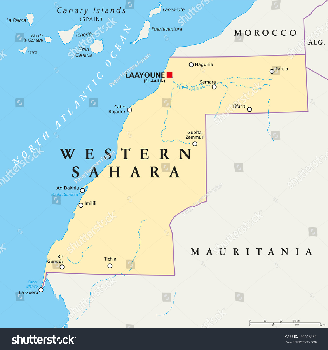
    The second group should focus on regional security, political, and social development issues. This is where US/Moroccan cooperation on political development in the MENA and West Africa region would be coordinated. It is also where Sahara would be discussed. At State, this second group would also likely fall to the Office Director to manage. The inclination will be to keep the workload down and not get overly ambitious lest the process fall victim to overwork. This is why we suggest keeping it to two groups and tightly defining priorities in each group. But we believe the Sahara should be a visible and important part of any committee structure, whether as a stand-alone committee or as part of a larger “regional” committee. 
    Separate committees under each broad category can be defined at a later time, or evolve from the first meeting and prior to a working group meeting in Rabat. In any case, the WS will need its own concentrated effort at the Fassi Fihri – Burns/Feltman level, and should be agreed upon as an issue that will be regularly discussed with specific action agenda items attached to the effort. We see this as the only way to keep the Sahara dialogue on a progressive track and potentially become an ingrained issue to be dealt with by this Administration and potentially future Administrations.
    Tags : Sahara Occidental, Front Polisario, Maroc, Morocco, 
  • Scene Setter – Your Senior Meeting at the State Department (Part II)

    Goals for Your Visit: 

    Obtain a senior level public announcement of a bilateral US/Moroccan commission to cooperate on issues of common bilateral as well as regional concern on both strategic security and political developments and in the MENA and West African regions. 
    Obtain a fresh and unequivocal senior level statement on Sahara that repeats the “serious, credible and realistic” phrase and also incorporates an element stressing the urgency of solving this problem and urges the need for compromise based on “realistic” terms. 
    Make sure that the Sahara issue has its own committee or special status within the commission. We believe that for the remainder of the Obama Administration, no further progress will be made on the Sahara issues unless it is part of a regularized commission discussion. Otherwise it will become a struggle just to keep the issue where it is. 
    We have not been privy to all of the various diplomatic exchanges that have taken place since your last visit to Washington, but our read on the situation at State today, from what we discern from watching their statements and reports in the news, is that little has changed within the bureaucracy since you were last here. Clear statements on the Sahara issue are void in their discourse. State’s behavior in the General Ham affair leads us to conclude that some there still believe they can get away with “improving” relations with Algeria at Morocco’s expense, although State may not characterize it that way. And State’s less than fully enthusiastic and unequivocal endorsement of the run up and the results of the reform vote all leave us with the view that the NEA has not yet been persuaded that they need to take Morocco’s interests more seriously. Like Ambassador Mekouar, we were astonished and taken back at how little State seemed to understand about what was happening on the ground in Morocco in the run up to the vote. Janet Sanderson’s charges of “rubber bullets and tear gas” and “we’re watching you” approach on the issue was not just out of place, it represented a serious, indeed almost willful, misreading of events on the ground. 
    In our continuing view, this kind of “dug in” resistance within the State bureaucracy can only be overcome by more frequent high level contact that lifts and regularizes the level of the dialogue to more senior levels and thus bears better prospect of reining in those within NEA (and elsewhere in State) who give every indication that they are still working a different agenda than the Secretary and her Deputy would prefer for Morocco. 
    Sahara Statement 
    The timing for such a statement is perfect following another process filled attempt by Chris Ross. The arguments in favor of such a statement remain the same. We think it more than appropriate to draw attention to the fact that since your visit and the Secretary’s statement, State has consistently failed to repeat the agreed language. Instead, returning to the same formula you noted was unsatisfactory for Morocco on your last visit. This should also provide the opportunity to leverage that failure into a further demand that the statement include the two additional elements we noted above – urgency and the need for compromise based on realistic terms.
    Tags : Sahara Occidental, Western Sahara, Frente Polisario, Maroc, Morocco,