Category: Front Polisario

  • Social Security taxes/totalization agreement (Part I)

    Memorandum

    TO: H.E. Ambassador Rachad Bouhlal
    From: Ed Gabriel
    RE: Eliminating Duplicate Social Security Payments
    Mr. Ambassador
    This document provides the background on the need to promote the adoption of a “totalization” agreement between Morocco and the US in order to eliminate duplicate social security payments for US employees residing in Morocco for more than six months. 
    I have also attached a copy of the Social Security Administrations (SSA) Totalization Agreement with Spain which clarifies what type of clauses are included in such agreements.
    I appreciate your attention to this concern and look forward to discussing it in detail with you.
    Regards,
    Ed
    Ambassador Edward M. Gabriel, Ret.
    President and CEO
    The Gabriel Company, LLC
    1220 L Street NW, Suite 411
    Washington DC, 20005
    Phone: +1 202.887.1113
    Fax: +1 202.887.1115
    Email: ed.gabriel@thegabrielco.com
    Website: http://thegabrielco.com
    PROPOSAL FOR THE CREATION OF THE:
    Morocco US Totalization Alliance (MUSTA)
    To eliminate duplicate social security payments
    Overview
    With increased prospects for a greater number of US citizens working in the Kingdom of Morocco, US employers with operations in Morocco, whether corporate or NGO, have expressed increased concern with regard to ensuring that the tax consequences for the employer and employees are dealt with equitably. Morocco has a tax agreement with the United States (Convention for the Avoidance of Double Taxation and the Prevention of Fiscal Evasion with Respect to Taxes on Income – signed in Rabat 1 August 1977, and Related Exchanges of Notes), but it does not apply to the estate, gift, and generation-skipping transfer taxes, the Windfall Profits Tax, Federal unemployment taxes, social security taxes, or excise taxes on premiums paid to foreign insurers. Therefore, US expatriates must conform to Moroccan social security laws and US employers are required to register their employees with the Caisse National de Securite Sociale (CNSS) and pay social security taxes on the basis of an employee’s gross salary and other benefits granted to the employees. 
    To alleviate this double taxation in other cases, the US Social Security Administration (SSA) has signed treaties, often referred to as Totalization Agreements, with government social insurance programs in various foreign countries. These treaties serve two main functions: 1) they eliminate dual Social Security taxation, so that workers from one country working in another country will not have to pay Social Security taxes to both countries on the same earnings; and 2) they help fill gaps in benefit protection for workers who have divided their careers between the United States and another country by providing continuity in their social security payments.
    Since a bi-lateral social security agreement/convention does not currently exist between the US and Morocco, it is necessary to initiate an effort to promote the mutual adoption of such an agreement at the earliest possible opportunity. 
  • Scene Setter – Your Senior Meeting at the State Department (Part III)

    Bilateral Commission 

    Unless some in-depth preparations have taken place already of which we are unaware, we are highly skeptical that U/S Burns and/or Secretary Clinton will be prepared on this visit to do more than agree a statement that formally establishes a Commission and states its purpose in general terms. It would be a plus, but might be very difficult without prior in-depth preparations, to have included in such a statement any description of its modalities (working groups are our recommendation) and periodicity (quarterly at the working level and annually at senior level — our counsel). We think it should be possible to define the categories in broad terms in a statement at this point such as “US/Moroccan bilateral relations, and security, social, economic and political development issues in the North and West Africa and the Middle East regions.” This is broad enough to allow discussion of what you want to include in specific categories. 
    Our advice is to concentrate first and foremost on agreeing to the language of the statement establishing the Commission and then concentrate on agreeing to what the content should be in terms of general issues to be covered, basic modalities of how it would function, and the meeting schedules. This would be a tremendous achievement in itself if all of this can be accomplished on this visit. In our view, trying to accomplish too much at such a senior level in one meeting without in-depth prior preparation risks putting the enterprise in jeopardy. It bears recalling that there is now little interest in this proposal below the Secretary and U/S Burns. Thepriority is to get something concrete established that will present the bureaucracy with something of a fait accompli so that they will then have to produce results for submission to more senior levels. You could also announce the appointment of a dual secretariat to oversee the commission on a daily working basis, If you can reach such agreement by the time of the meeting. In other words, each country would appoint a principal person to oversee the work of the committees of the commission. These two individuals would become the overall coordinators for the effort and could be announced at the time of the Burns meeting. 
    In any case, we suggest that you propose a senior level group to meet in the immediate future (we would suggest in Rabat) to conclude details on a formal statement of purpose and scope for the Commission once the language and statement to establish the Commission has been agreed and announced in Washington at a senior level on this visit 
    For such a statement establishing the commission, and if discussions proceed to that depth during your visit, we suggest that the “charter” for the commission begin with a preamble that recalls the strong and historic character of US/Moroccan relations and emphasize our common commitment to a set of shared political and social values based on democratic process, respect for human rights, minority and gender equality, justice before the law, and respect for international agreements in the resolution of regional disputes. 
    In terms of establishing categories for working groups, we think that the more simply it is presented, the better the chance of its being accepted. We would suggest that you propose only two broad categories at the outset. One working group would work on bilateral issues between the US and Morocco. This group could cover the full range of issues from human rights to economic assistance. It clearly would be managed within State at the Office Director level through periodic interagency meetings to work on issues that are commonly agreed as requiring priority attention. 
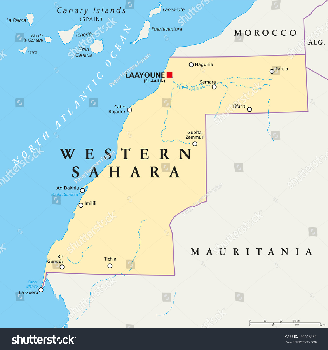
    The second group should focus on regional security, political, and social development issues. This is where US/Moroccan cooperation on political development in the MENA and West Africa region would be coordinated. It is also where Sahara would be discussed. At State, this second group would also likely fall to the Office Director to manage. The inclination will be to keep the workload down and not get overly ambitious lest the process fall victim to overwork. This is why we suggest keeping it to two groups and tightly defining priorities in each group. But we believe the Sahara should be a visible and important part of any committee structure, whether as a stand-alone committee or as part of a larger “regional” committee. 
    Separate committees under each broad category can be defined at a later time, or evolve from the first meeting and prior to a working group meeting in Rabat. In any case, the WS will need its own concentrated effort at the Fassi Fihri – Burns/Feltman level, and should be agreed upon as an issue that will be regularly discussed with specific action agenda items attached to the effort. We see this as the only way to keep the Sahara dialogue on a progressive track and potentially become an ingrained issue to be dealt with by this Administration and potentially future Administrations.
    Tags : Sahara Occidental, Front Polisario, Maroc, Morocco,